
Picture this: You’ve just planted a beautiful young maple in your yard, but keeping it properly watered feels like a guessing game. Will you remember to water it every day? Are you giving it too much or too little? This is where tree watering bags become your secret weapon for caring for newly planted trees.
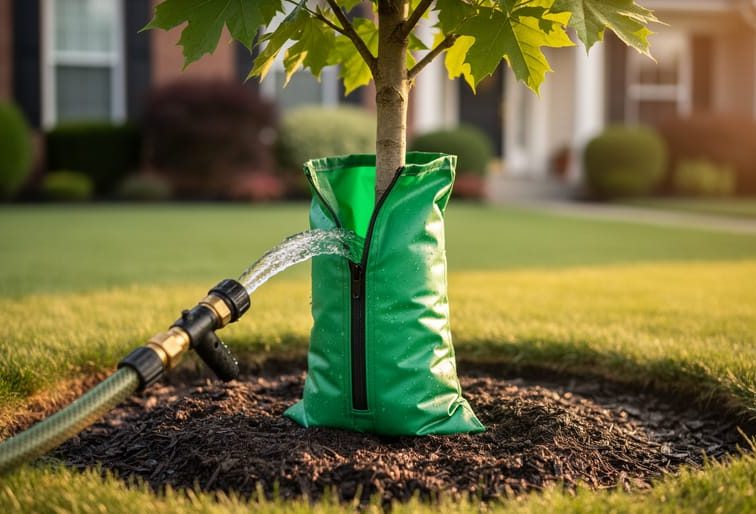
Tree watering bags are simple yet brilliant devices that slowly release water directly to your tree’s root zone over several hours. Think of them as a gentle, steady drip system wrapped right around your tree’s trunk. You fill the bag once, zip it up, and tiny perforations at the bottom release 15-20 gallons of water gradually—usually over 5-9 hours. This slow-release method means water soaks deep into the soil instead of running off across your lawn, giving roots exactly what they need to establish themselves.
The beauty of these bags lies in their simplicity. No timers, no hoses, no complicated setups. Just fill, forget, and refill when empty. For busy gardeners juggling work, family, and community commitments, they’re a game-changer that takes the stress out of tree care while giving your new plantings the consistent moisture they desperately need during those critical first years.
What Are Tree Watering Bags?
If you’ve recently planted a tree in your yard or participated in a community tree-planting event, you might have noticed these helpful devices wrapped around young saplings. Tree watering bags are simple yet ingenious tools designed to make caring for newly planted trees much easier, especially during those critical first few years.
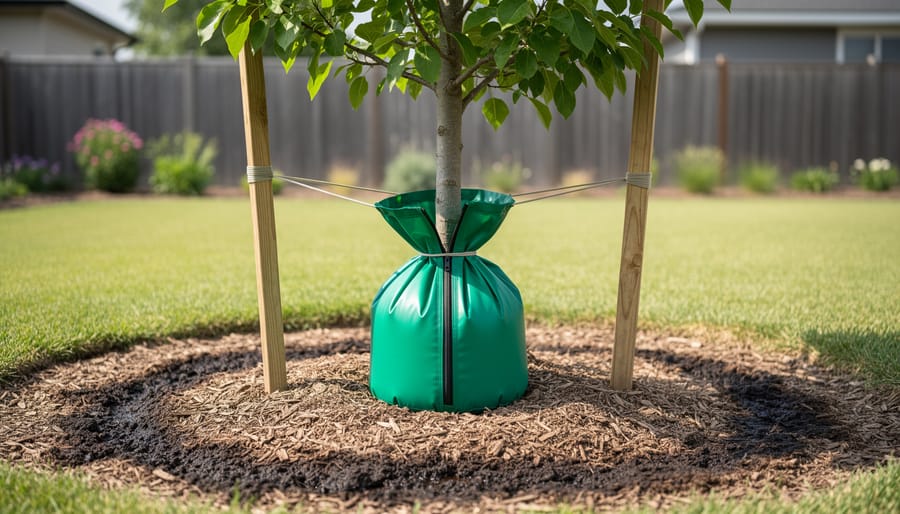
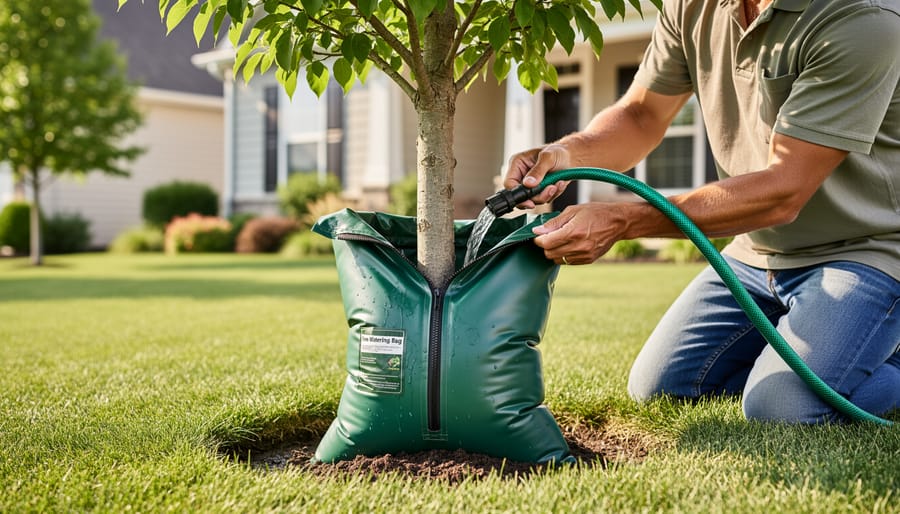
Picture a durable fabric bag, typically made from thick, UV-resistant plastic or heavy-duty polyester material. It’s designed to wrap snugly around the base of a tree trunk, almost like giving your tree a big hug. Most bags are bright green, though you’ll also find them in black or other colors. They look a bit like oversized pillows or sleeping bags for trees.
The basic purpose is beautifully straightforward: these bags act as slow-release water reservoirs for your tree. Instead of quickly watering your tree and watching most of that precious water run off or evaporate, you fill the bag and it gradually releases moisture directly to the root zone over several hours. It’s like having a patient friend stand by your tree, providing it with steady sips of water throughout the day.
For Canadian gardeners dealing with hot, dry summers or simply busy schedules, tree watering bags are wonderful allies. They typically hold between 15 to 20 gallons of water and feature small holes or perforations at the bottom that allow water to seep out slowly and evenly, ensuring your young tree receives consistent hydration without any fuss from you.
How Tree Watering Bags Actually Work
The Slow-Release System
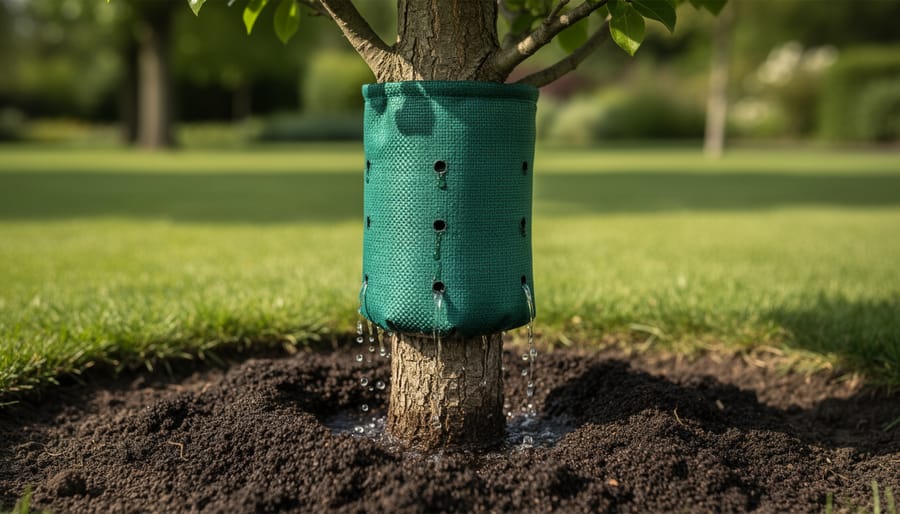
The magic of tree watering bags lies in their beautifully simple slow-release design. Unlike dumping water from a bucket (which often runs off before reaching the roots), these bags feature tiny perforations or porous material along the bottom that release water droplet by droplet. Think of it like a gentle rain that lasts between 5 to 9 hours, depending on your bag’s size and design.
This gradual delivery method is a game-changer for your trees. As water seeps out slowly, the soil has time to absorb every drop, pulling moisture deep down to where growing roots need it most. There’s no wasteful runoff streaming across your lawn or down the driveway. Instead, you’re creating a consistent moisture zone that encourages roots to grow strong and deep rather than staying shallow and vulnerable.
Many Canadian community gardeners have shared how this slow-release approach transformed their tree planting success rates, especially during our increasingly unpredictable summers. The soil stays evenly moist without becoming waterlogged, and you avoid that cycle of drought stress followed by flooding that can shock young trees. It’s sustainable watering at its finest, delivering maximum benefit from every precious litre.
Deep Root Watering vs. Surface Watering
Traditional watering methods like hand-watering or sprinklers can seem easier, but here’s what often happens: water pools on the surface, evaporates in the sun, or runs off before it penetrates deeply. Your tree’s roots learn to stay shallow, reaching upward for that surface moisture, which makes them vulnerable during dry spells.
Tree watering bags work differently by delivering moisture exactly where your tree needs it most. Through deep root watering, these bags slowly release water that soaks down 12 to 18 inches into the soil, encouraging roots to grow deeper and stronger. Think of it like teaching your tree to be self-sufficient rather than dependent on daily shallow drinks.
Maria from Edmonton shared that after switching to watering bags for her boulevard maples, she noticed healthier growth even during hot summers. The slow, steady release means less water waste and more efficient absorption. In Canadian climates where we experience both summer droughts and water restrictions, this method aligns perfectly with sustainable gardening practices. Your tree develops resilience, and you spend less time dragging hoses around while knowing you’re conserving water.
The Science of Consistency
When you plant a new tree, think of it like someone moving to a completely new neighbourhood. Everything feels unfamiliar, and it takes time to settle in and put down roots—literally! This adjustment period, called transplant shock, is when your tree needs the most support.
Here’s where the magic of slow watering makes all the difference. When water drips gradually from a tree watering bag over several hours, it seeps deep into the soil rather than running off the surface. This encourages roots to grow downward, searching for that moisture and creating a strong, stable foundation. Deep roots mean a tree that can weather droughts and storms for decades to come.
Compare this to quick watering with a hose, where water often pools on top or rushes away before the soil can properly absorb it. The roots stay shallow, chasing surface moisture, making your tree vulnerable during dry spells.
Many Canadian gardeners have shared stories about struggling with newly planted trees until they discovered slow-watering methods. One community gardener in Ontario noticed her boulevard maples thrived after switching to watering bags, while her neighbour’s trees, watered quickly each week, struggled through their first summer. Consistency really does create resilience.
Why New Trees Need This Kind of Care
When you bring home a new tree and nestle it into your garden, you’re asking a lot of that young plant. Think of it like moving to a completely new city—everything feels unfamiliar, and it takes time to settle in and find your roots, literally and figuratively.
New trees face some serious challenges in those first few years. The biggest hurdle is transplant shock, which happens when a tree’s root system gets disrupted during planting. In the nursery, trees grow comfortably with their roots contained, but once transplanted, those roots need to venture out and establish themselves in brand new soil. During this vulnerable period, consistent moisture is absolutely essential—without it, your tree might struggle to survive, let alone thrive.
Here’s something many Canadian gardeners don’t realize: grass is actually a fierce competitor for water. Those innocent-looking lawn roots are shallow but incredibly efficient at grabbing moisture before it can reach your tree’s developing root system. When you water with a hose or sprinkler, much of that water either runs off the surface or gets intercepted by turf grass before penetrating deep enough to benefit your tree.
Traditional watering methods also tend to be inconsistent. We all have busy lives, and it’s easy to forget a watering session or misjudge how much water we’ve actually delivered. One day you might overwater, the next you might underwater—and that inconsistency stresses young trees even more.
Many communities across Canada are launching tree planting initiatives to increase urban canopy coverage and combat climate change. These programs succeed when newly planted trees actually survive, which is where proper watering becomes a community responsibility. When neighbours share knowledge about effective watering tools and techniques, everyone’s trees benefit, and our shared green spaces flourish.
Using a Tree Watering Bag: A Step-by-Step Walkthrough
Setting Up Your Bag
Setting up your tree watering bag is wonderfully simple, and you’ll have it ready in just a few minutes. Start by unzipping or opening the bag completely and wrapping it around the base of your tree trunk, positioning it so the opening faces upward. Most bags have a zipper that runs vertically, making it easy to wrap around trees of different sizes. Once positioned, zip or secure the bag closed around the trunk. The beauty of these bags is their flexibility—they work perfectly for saplings and young trees with trunks ranging from about two to four inches in diameter. Make sure the bag sits flat on the soil surface without any gaps underneath, as this ensures water releases directly into the root zone rather than running off to the side. Give it a gentle tug to confirm it’s snug but not too tight against the bark. Many community tree planting groups across Canada have found that checking the fit takes just seconds, and it’s totally worth it for the peace of mind knowing your new tree will get consistent hydration during those critical early years.
Filling and Maintenance
Once your watering bag is set up, the good news is that maintenance is refreshingly simple. Most bags need refilling once or twice per week during the growing season, depending on your tree’s size and local weather conditions. Think of it as a weekend ritual—grab your garden hose, unzip the top, and fill it up. The whole process takes just a few minutes, and you’ll quickly develop a rhythm that works for your schedule.
To check if everything’s working properly, look for small water droplets or damp soil around the base of your tree within the first hour after filling. The ground should feel consistently moist, not soggy or bone-dry. If water pools on the surface, your soil might need aeration. If it drains too quickly, you may need a second bag or more frequent refills.
As seasons change, so do your tree’s water needs. During hot Canadian summers, especially in July and August, you might need to fill more frequently. Come fall, as temperatures drop and rainfall increases, you can scale back. Many gardeners in our communities remove their bags entirely once consistent fall rains arrive, storing them for next season.
One community member from Winnipeg shared a helpful tip: mark your calendar or set phone reminders for refill days. It’s easy to forget during busy weeks, but your young tree depends on that steady moisture. Consider coordinating with neighbours who also use watering bags—you can remind each other and share observations about what’s working best in your area.
Real Benefits You’ll Notice
Once you start using tree watering bags, you’ll notice some pretty wonderful changes. First, there’s the time-saving aspect. Instead of standing with a hose for twenty minutes or making multiple trips with buckets, you simply fill the bag once and walk away. It handles the rest while you get back to enjoying your garden.
Your water bill will thank you too. These bags use about 60% less water than traditional watering methods because there’s virtually no runoff or evaporation. Every drop goes exactly where it’s needed, straight to the roots.
But the real magic shows up in your trees themselves. You’ll see stronger, more vibrant growth with deeper green leaves and sturdier branches. Because the soil stays consistently moist without waterlogging, roots develop properly and trees establish themselves faster and healthier.
Sarah from the Kitchener Community Garden shared her experience with watering bags during their community tree planting initiative last spring. “We planted fifteen fruit trees and were worried about keeping them all watered consistently with our volunteer schedule,” she told us. “The watering bags were game-changers. Even during that hot July week when nobody could make it to the garden, our trees stayed healthy. Now they’re all thriving, and we’ve recommended the bags to other community gardens across Ontario.”
For anyone juggling a busy schedule or managing multiple new trees, these bags turn what could be a stressful daily chore into a simple weekly task.
Common Questions from First-Time Users
If you’re new to tree watering bags, you probably have a few questions running through your mind. Let’s tackle the most common ones!
Do they work in Canadian winters? Great question! Most gardeners remove their watering bags before winter sets in. Freezing temperatures can damage the bags, and your tree won’t need supplemental watering when it’s dormant. Store your bags indoors during the cold months, and they’ll be ready to go again in spring. Think of it as tucking them in for a cozy winter break!
Can you overwater with a tree watering bag? Here’s the beauty of these bags—they’re designed to prevent overwatering. The slow-release system mimics natural rainfall, so water penetrates deeply without creating puddles or waterlogged soil. However, if your area gets heavy rainfall, you might want to empty the bag temporarily to give your tree a break. Your tree will thank you for paying attention!
What size bag do I need? Most bags come in 15 to 20-gallon sizes, perfect for newly planted trees up to about 8 inches in diameter. Larger, established trees might benefit from using two bags zipped together. When in doubt, check the trunk diameter—one bag typically handles trees with trunks up to 4 inches across.
Are they reusable? Absolutely! Quality tree watering bags can last several seasons with proper care. After each season, simply clean them, let them dry completely, and store them flat in a dry spot. Many community gardeners share their bags season after season, passing along both the tools and the tree-care knowledge.
Tree watering bags truly are one of those beautifully simple solutions that make a real difference. By delivering slow, steady moisture right where your new trees need it most, these bags take the guesswork out of early tree care and give your saplings the best possible start. Whether you’re planting a single tree in your backyard or organizing a neighbourhood planting project, watering bags help ensure those young trees establish strong roots and thrive for generations to come.
The sustainable aspect is worth celebrating too. By reducing water waste and making efficient watering accessible to everyone, these bags support environmental stewardship in the most practical way. They’re perfect for community initiatives where volunteers might not have extensive gardening experience but want to contribute meaningfully to greening their neighbourhoods.
If you’ve been thinking about planting trees or joining a local tree-planting group, watering bags are definitely worth trying. They’re affordable, reusable, and genuinely effective at helping trees survive those critical first years. Your future self, your neighbours, and the birds that’ll nest in those branches someday will thank you for taking this simple step toward a greener, healthier community.