
There’s something magical about tucking an alpine plant between two weathered stones and watching it thrive where grass never could. Rock gardening opens up possibilities most people never imagine, turning problem slopes, poor soil, and forgotten corners into stunning focal points that practically take care of themselves.
Whether you’re curious about designing with stones or searching for fellow enthusiasts who share your passion, you’ve found the right place. Rock gardening combines practical problem-solving with artistic expression. That shady spot under your maple tree? A perfect candidate for a woodland rock garden with ferns and hostas. The dry, sunny patch where nothing grows? Ideal for heat-loving sedums nestled among limestone chunks.
The beauty of gardening with rocks goes beyond aesthetics. Stones regulate soil temperature, reduce water evaporation, and create microclimates that expand what you can grow in your Canadian garden. A well-placed boulder can protect tender plants from harsh winter winds while warming them during cool spring mornings.
But here’s what makes rock gardening truly special in 2026: the community. Gardeners across Canada are rediscovering alpine plants and stone landscaping, sharing successes and learning together. From beginners placing their first three stones to experienced gardeners cultivating rare alpine treasures, everyone has something to contribute.
You don’t need a mountain or extensive experience to start. Most rock gardens begin with a handful of stones, a few hardy plants, and curiosity about what’s possible. The Ontario Rock Garden and Hardy Plant Society has connected countless gardeners who thought they were alone in their interest, proving that rock gardening isn’t just about the plants and stones. It’s about finding your people and growing together.
What Makes Rock Gardening So Special?
Rock gardens are having a moment across Canada, and it’s easy to see why stones work so brilliantly in our diverse landscapes. Unlike traditional gardens that demand constant watering and weeding, rock gardens thrive on neglect. They’re the perfect answer for busy gardeners who want beauty without the burden, especially as water restrictions become more common in Canadian cities.
The sustainability angle matters more than ever in 2026. Rock gardens naturally reduce water consumption, which aligns with the low-water landscaping benefits that homeowners increasingly seek. Stones retain heat during the day and release it at night, creating microclimates where hardy plants flourish. This self-regulating system means fewer inputs and less maintenance, a win for both your schedule and the environment.
What really sets rock gardens apart is their adaptability. Got a tiny urban balcony? A hillside that won’t grow grass? A shady corner where nothing seems to survive? Rock gardens handle all these challenges with grace. They turn problem spots into focal points, making the most of difficult terrain that would otherwise sit empty.
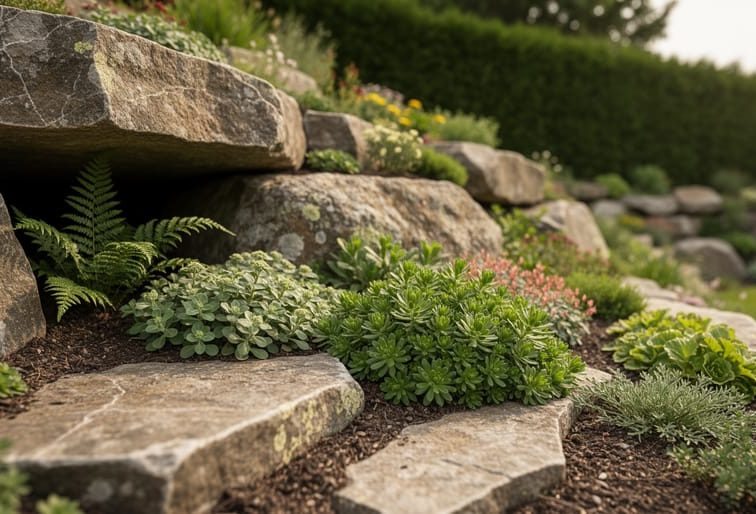
The plants themselves are the hidden treasure. Alpine species and hardy perennials offer textures and colours you won’t find in standard garden centres. Sedums cascade over stones, saxifrages tuck into crevices, and creeping thyme releases fragrance when brushed. These tough little plants evolved in harsh mountain conditions, so Canadian winters don’t faze them. They’re compact, dramatic, and perfectly sized for small spaces.
Rock gardening also connects you to something primal. Arranging stones, choosing plants, watching tiny alpine flowers emerge each spring, it’s gardening stripped down to its essence. You’re working with the landscape instead of fighting it, creating spaces that feel both wild and intentional.
Getting Started: Your First Rock Garden
Choosing the Right Rocks and Materials
Start by checking what’s already in your neighbourhood. Many Canadian landscaping suppliers and garden centres stock a range of stones, from river rock to limestone, and buying locally cuts transport costs while supporting nearby businesses. You can also scout construction sites, farms, or even your own property for weathered fieldstones that blend beautifully into natural settings.
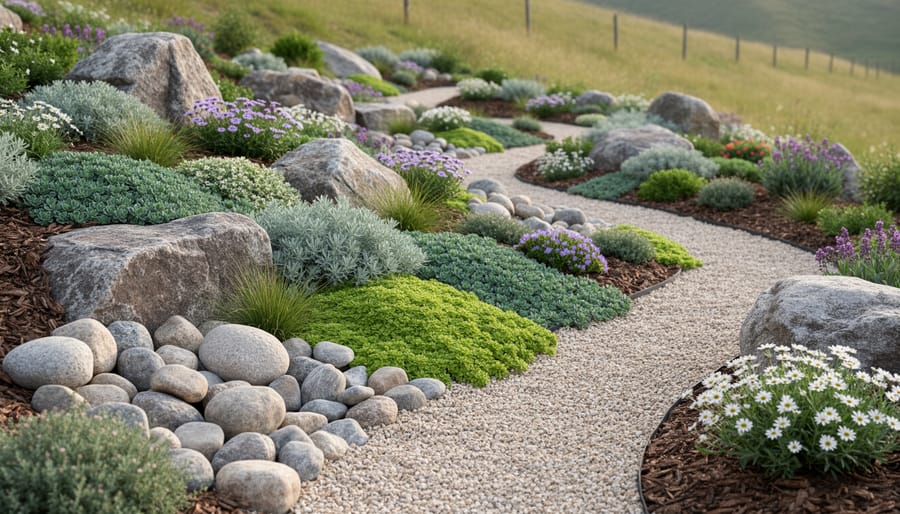
For structure and focal points, choose larger rocks with interesting shapes or colours. Limestone and granite work well in most Canadian climates and weather gracefully over time. Smaller stones like pea gravel or crushed granite make excellent mulch around plants, helping with drainage and weed suppression.
Arrange rocks as nature would: partially bury them so they look settled rather than plunked on top, cluster them in odd numbers, and vary sizes to create visual interest. Tilt flat stones slightly backward to catch rain and direct it toward plant roots. Avoid creating uniform rows or overly symmetrical patterns.
Canadian gardeners should consider how rocks will handle freeze-thaw cycles. Porous stones like sandstone can crack in harsh winters, while dense granite and river rock hold up year after year. Start with what you can lift comfortably and build from there.

Hardy Plants That Thrive in Rock Gardens
Canadian rock gardens thrive when you choose plants that laugh off our harsh winters and bounce back every spring. Alpine plants like saxifraga and aubrieta naturally hug the ground, creating cascading colour between stones while handling Zone 3 temperatures without fuss. Sedums are the workhorses of rock gardens, varieties like ‘Autumn Joy’ and ‘Dragon’s Blood’ store water in their fleshy leaves, so they’ll survive if you forget to water during a dry spell.
Creeping thyme transforms bare patches into fragrant carpets that release scent when you brush past them, while hens-and-chicks (sempervivum) multiply freely, filling gaps without any help from you. These hardy succulents come in dozens of colours, from deep burgundy to silvery green, adding year-round interest that rivals any perennial border.
For vertical interest, try dwarf conifers like ‘Blue Star’ juniper or miniature pines that stay compact and provide structure through winter. Pasque flowers (pulsatilla) push through late snow with fuzzy buds that open into purple blooms, proving rock garden plants can handle whatever spring throws at them.
The real advantage? Most of these species need dividing only every few years and actually prefer lean soil over rich garden beds. They’ve evolved in mountain environments where nutrients are scarce and drainage is fast, which means they’re perfectly adapted to the conditions you’ve already created in your rock garden.
Join the Gardening Rocks Community in Ontario
The Ontario Rock Garden & Hardy Plant Society (ORG&HPS) proves that rock gardening rocks when you’re surrounded by people who share your passion. As a chapter of the North American Rock Garden Society, this Ontario-based group has created a welcoming space where beginners and experienced gardeners swap tips, plants, and stories about their alpine adventures.
Every second Sunday of the month from 1:30 to 4 p.m., members gather at the Toronto Botanical Garden for meetings that blend education with community. These aren’t stuffy lectures. Picture lively discussions about which sedums survived the winter, debates over the perfect drainage mix, and friendly advice on how to overwinter perennials in challenging microclimates. The atmosphere feels more like catching up with friends than attending a formal meeting.
| Event | Frequency/Date | Details |
|---|---|---|
| Monthly Meetings | 2nd Sunday, 1:30-4 p.m. | Toronto Botanical Garden |
| Plant Sales | 3-4 times yearly | Members share divisions and rare finds |
| Garden Tour 2026 | September 13, 1-5 p.m. | Visit members’ gardens across Ontario |
| Seed Exchange | Annual | Up to 60 packets for $15 |
The society’s plant sales happen three to four times each year, giving members access to divisions from established gardens and sometimes rare alpine species you won’t find at typical garden centers. It’s a chance to expand your collection while supporting fellow enthusiasts.
Mark your calendar for September 13, 2026, when the ORG&HPS Garden Tour runs from 1 to 5 p.m. You’ll visit real rock gardens created by members across Ontario, seeing firsthand how different gardeners tackle slopes, shade, and small spaces. There’s something inspiring about walking through someone’s garden while they explain what worked, what didn’t, and what surprised them.
The annual Seed Exchange offers remarkable value: up to 60 seed packets for just $15. Members contribute seeds from their own gardens, creating a diverse collection that ranges from common hardy plants to unusual alpine treasures. For new rock gardeners, it’s an affordable way to experiment with different species and discover what thrives in your specific conditions.
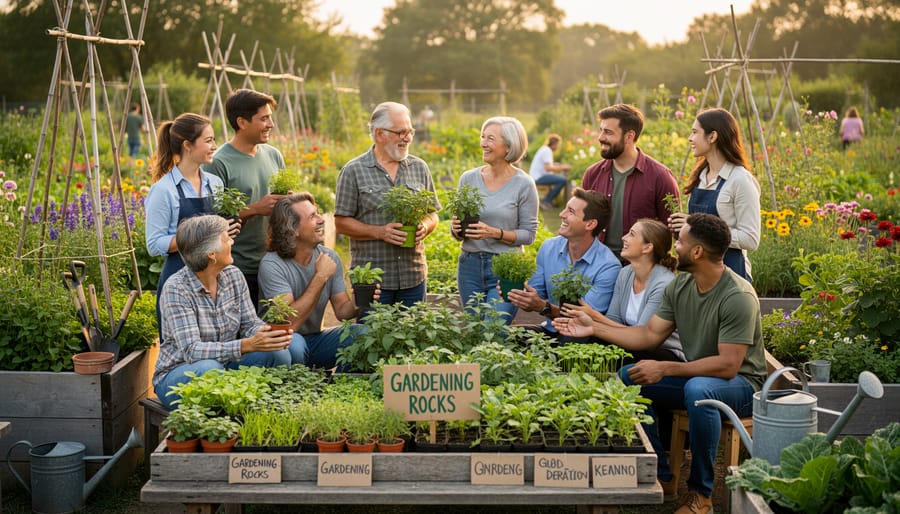
Real Stories: Canadian Rock Gardeners Share Their Journeys
When Sarah moved from downtown Toronto to a suburban townhouse in 2024, she inherited a neglected slope filled with weeds and poor soil. “I had zero gardening experience and even less confidence,” she admits. After attending her first Ontario Rock Garden & Hardy Plant Society meeting at Toronto Botanical Garden, everything changed. Members didn’t just share advice, they offered plants from their own gardens and helped her understand which varieties would thrive in her challenging space. Two years later, her rock garden features thriving sedums and creeping thymes that cascade between carefully placed stones.
Mark’s story from Vancouver Island shows that even experienced gardeners face learning curves. After thirty years of traditional perennial beds, he decided to convert a section to rock gardening. His first attempt failed when he ignored drainage principles and lost plants to winter rot. “I thought I knew everything about gardening, but rock gardens taught me humility,” he says. Connecting with rock gardening groups online helped him understand the specific needs of alpine plants. Now he mentors newcomers through the same mistakes.
In Winnipeg, retired teacher Janet discovered rock gardening during the pandemic. The combination of physical activity and problem-solving appealed to her, but the real reward came from connecting with fellow enthusiasts. She started small with a container rock garden on her apartment balcony, sourcing local stones from a creek bed. “People think you need a big yard, but I’ve created an entire miniature landscape in three square feet,” she explains. She’s now planning to attend the 2026 Garden Tour in Ontario to see established gardens and meet the community in person.
These gardeners share a common thread: they found more than a hobby. They discovered a welcoming community where failures become teaching moments and successes are celebrated together.
Sustainable Practices for Rock Garden Success
Rock gardens aren’t just beautiful; they’re one of the most environmentally responsible choices you can make for your Canadian landscape. By working with natural materials and drought-tolerant plants, you’re creating a garden that thrives while using fewer resources and requiring less intervention than traditional garden beds.
Water conservation stands out as perhaps the biggest environmental benefit. Once established, rock gardens need minimal watering because the stones retain moisture in the soil beneath while alpine and hardy plants have evolved to survive with little water. This makes them perfect for our increasingly unpredictable Canadian weather patterns. If you do need supplemental watering during establishment, consider smart irrigation systems that deliver water precisely where it’s needed.
Supporting native and hardy species creates habitat for local pollinators and beneficial insects. Many rock garden plants, including native sedums and creeping thyme, provide food sources for bees and butterflies while requiring zero pesticides. The rocks themselves offer shelter for ground beetles and other helpful creatures that keep pest populations in check naturally.
Here are key sustainable practices to maximize your rock garden’s environmental benefits:
- Source rocks locally to reduce transportation emissions and support regional stone suppliers
- Choose native alpine plants adapted to your specific climate zone
- Skip chemical fertilizers; rock garden plants thrive in lean soil conditions
- Use the rocks to create microclimates that shelter plants and reduce water evaporation
- Let leaf litter settle between rocks to feed soil organisms naturally
The reduced maintenance needs translate directly into environmental gains. You’ll spend less time mowing, edging, and applying treatments, which means less fuel consumption and chemical runoff. Your rock garden becomes a low-impact feature that looks stunning year-round while actively supporting local ecosystems and conserving precious water resources.
Whether you’re drawn to the quiet beauty of alpine plants nestled between stones or the vibrant community of fellow gardeners who share your passion, rock gardening offers something truly special. It’s a way to work with nature rather than against it, creating sustainable spaces that thrive with minimal fuss while giving you a real sense of accomplishment.
The best part? You don’t need to tackle everything at once. Start with a small corner of your yard, a few well-chosen rocks, and some hardy plants that speak to you. Join a local group like the Ontario Rock Garden & Hardy Plant Society to learn from others who’ve been where you are now. Attend a garden tour, swap seeds, or simply show up to a meeting and ask questions.
Across Canada in 2026, gardeners are discovering that rock gardening isn’t just about the rocks or the plants. It’s about connection, to the earth beneath your hands, to the rhythms of the seasons, and to a community that genuinely gets why you light up when talking about sedums. That’s why gardening rocks, in every sense of the phrase.