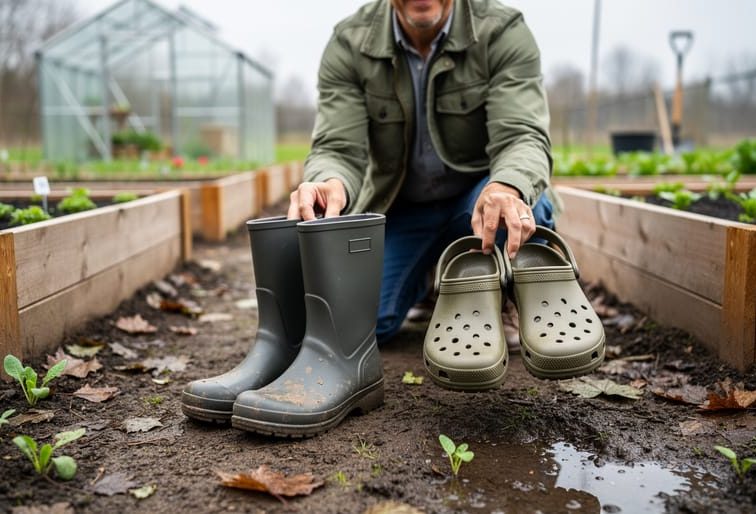

In most Canadian gardens, the best time to invest in dedicated gardening shoes is early spring, typically late March through April, before the soil thaws completely and muddy conditions set in. Your region’s frost dates and rainfall patterns determine whether you need waterproof boots in April or breathable clogs by May.
The shift from winter to growing season creates the widest range of footwear demands. A Vancouver gardener faces eight months of wet soil and needs different protection than someone in Calgary, where intense summer heat and dry conditions dominate by July. This timing matters because buying the wrong shoe for your peak gardening months means blisters, wet socks, or overheated feet halfway through the season.
Most experienced gardeners keep two pairs: waterproof boots for spring cleanup and transplanting, then lighter shoes for summer weeding and harvesting. The transition point varies by hundreds of kilometers. If you’re starting seeds indoors in February but won’t touch outdoor soil until May, you have time to research and test options before committing to a full-price pair.
Choosing gardening shoes isn’t about finding one perfect style. It’s about matching footwear to your soil type, the tasks you do most often, and how long you spend standing in garden beds during your region’s specific growing window.
Quick Answer: Matching Your Gardening Shoes to Canadian Seasons
Canadian gardening seasons demand different footwear, and getting it right makes every garden task more comfortable. Here’s what works when.
During spring’s mud season (typically April through early June across most of Canada), you need waterproof, easy-to-clean shoes. Rubber gardening shoes shine here because they rinse clean after slogging through clay-heavy soil and spring runoff. The Sloggers Women’s Waterproof Comfort Shoes exemplify this category, tested extensively for yard work and outdoor tasks.
Summer’s growing season (June to August) lets you shift to more breathable footwear. You’re spending longer hours weeding, harvesting, and tending beds in warm weather, so comfort and ventilation matter more than maximum waterproofing. Look for shoes that balance protection with airflow.
Fall (September through November) brings you back to waterproof territory. Rain returns, leaves get slippery, and morning frost appears. The same rubber shoes that served you in spring work well again, offering stability on wet surfaces and keeping your feet dry during harvest and garden cleanup.
For early spring or late fall when temperatures hover near freezing, consider insulated options. Canadian gardeners in colder zones or those extending their season with cold frames appreciate boots that keep toes warm while still protecting against moisture.
Timing Windows: When to Switch Your Garden Footwear
Spring Mud Season (April to Early June)
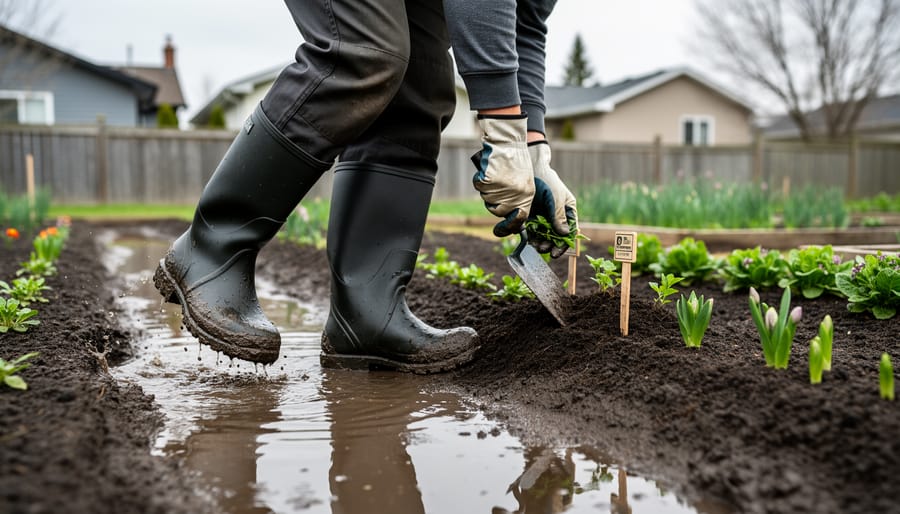
Spring brings hope to Canadian gardens, but it also brings mud, lots of it. As snow melts and April rains soak the ground, your garden beds turn into a sticky, clay-heavy mess that clings to everything. This is when waterproof gardening footwear becomes essential, not optional.
Marie, a Gardening Life member from southern Ontario, learned this the hard way her first spring. “I wore old runners thinking I’d just rinse them off. Three trips to the compost bin later, they were ruined, soaked through and caked with clay that never fully came off.” Now she switches to rubber waterproof shoes the moment the ground thaws.
The key features you need during mud season are simple: completely waterproof materials, smooth surfaces that shed mud easily, and enough grip to keep you stable on slippery grass. Forget breathability for now. Your priority is keeping your feet dry while you’re direct-seeding peas in soggy soil or hauling wheelbarrows through puddles. Easy cleaning matters too, since you’ll be hosing these shoes down almost daily through early June.
Summer Growing Season (June to August)
As temperatures climb and the garden hits its productive peak, your footwear needs shift dramatically from spring’s mud boots. Long days weeding, watering, and harvesting demand shoes that won’t turn your feet into sweat puddles by noon.
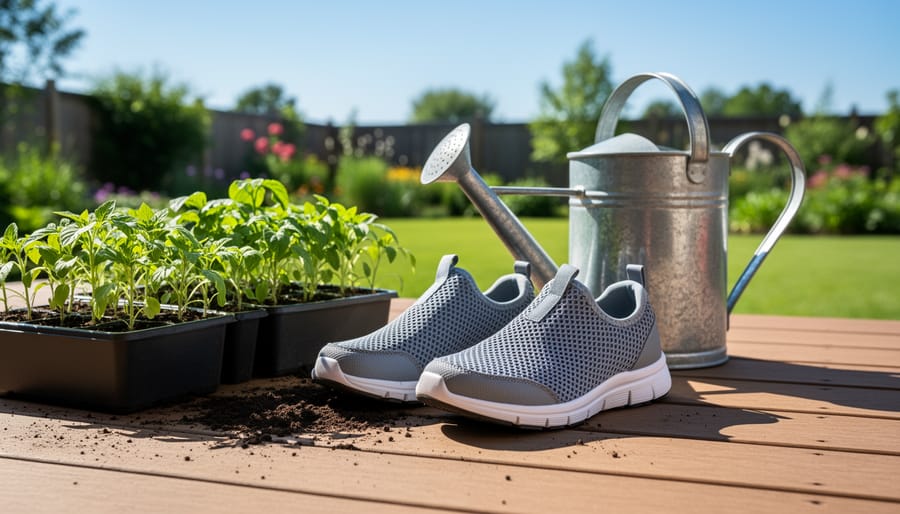
Breathable materials become non-negotiable during June through August in Canadian gardens. Canvas-topped garden shoes or mesh panels let air circulate while you’re spending three or four hours straight tending tomatoes and deadheading flowers. You still need decent traction for wet morning dew and protection from sharp twigs, but that rubber boot that saved you in April will feel like a sauna by July.
Community members in southern Ontario and the BC interior report switching to lightweight clogs or slip-on garden shoes that they can kick off quickly between tasks. The key is finding options that dry fast when you’re hand-watering or get caught in a summer thunderstorm, yet provide enough sole support for kneeling, standing, and walking between beds. Your summer shoes should feel almost forgettable on your feet, letting you focus on the garden rather than discomfort.
Fall Harvest and Cleanup (September to November)
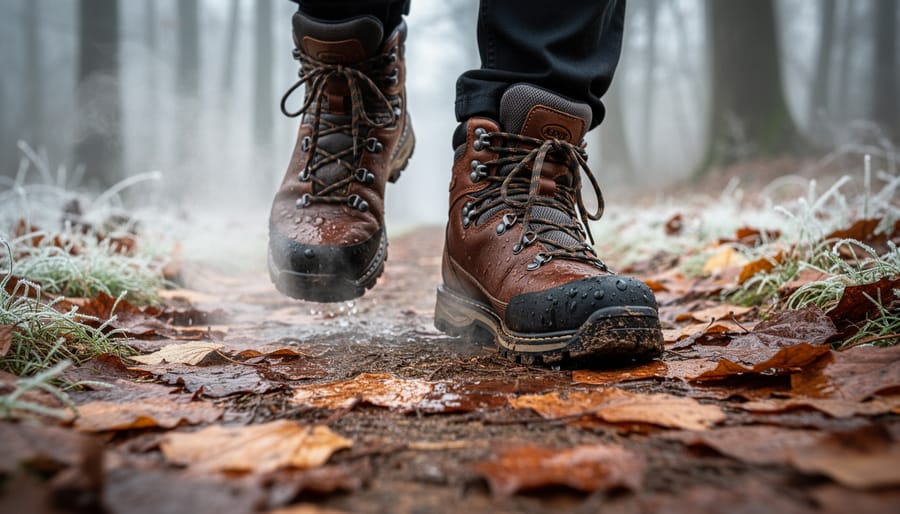
September through November marks the shift from harvest abundance to garden closure, and your footwear needs change accordingly. As rain returns and temperatures drop, you’ll want shoes that are waterproof for wet weather to handle increasingly wet conditions. The same protection that served you in spring becomes essential again, but now you’re dealing with different hazards, slippery decomposing leaves, frost-hardened soil, and the repetitive bending of fall cleanup tasks.
Traction matters more during fall than any other season. Wet leaves create surprisingly slick surfaces, especially on slopes or stone pathways. Look for deep treads that grip even when you’re carrying heavy harvest baskets or bags of leaves. Many Canadian gardeners doing organic lawn care fall routines appreciate shoes with reinforced toe protection too, those hidden rocks and root edges hurt more when your feet are already cold.
Factors That Shift Your Timing
Your garden’s location and your personal setup play a huge role in when you’ll switch between footwear types. A Vancouver gardener dealing with year-round moisture faces different timing than someone in Saskatoon, where spring arrives late but summer heat is intense. Understanding these variables helps you make smarter choices than following a generic calendar.
Several key factors influence your footwear timing decisions:
– Regional climate differences: BC coastal gardeners may wear waterproof shoes nine months of the year, while Prairie gardeners need serious insulation for early spring but breathable options by June, and Eastern Canada gardeners face dramatic seasonal swings requiring a full footwear rotation
– Garden soil type: Heavy clay holds moisture longer, extending your need for waterproof protection well into June, while sandy or raised beds drain quickly and let you switch to breathable shoes earlier
– Irrigation setup: Gardens with smart garden irrigation or drip systems keep you drier than overhead watering, which might mean lighter shoes work most of the season
– Mobility needs: Gardeners with knee or back concerns may prioritize cushioned support year-round over seasonal waterproofing, choosing insulated waterproof boots in winter but supportive sneakers with protective covers in summer
– Frequency of gardening: Daily gardeners wear through shoes faster and benefit from investing in season-specific pairs, while weekend gardeners might get by with one versatile waterproof option plus gardening gloves for protection
One Edmonton community gardener told us she keeps three pairs on rotation: insulated rubber boots for early spring when plots are still half-frozen, breathable clogs for summer, and mid-weight waterproof shoes for fall cleanup. That approach works for her clay-heavy plot, but her neighbour with raised beds gets away with two pairs total because his soil drains within hours of rain.
Pay attention to your garden’s actual conditions rather than the date on the calendar. If your boots are staying dry inside by late May, that’s your signal to try something lighter, regardless of what the seasonal guide suggests.
What to Look for in Quality Gardening Shoes
When you’re choosing gardening shoes that’ll actually hold up through a Canadian season, focus on the features that professional testers prioritize. The Spruce spent over 70 hours testing 15 pairs of gardening shoes in real yard conditions, rating them on quality, comfort, durability, design, and overall value, and their findings reveal what separates functional footwear from frustrating purchases.
The most critical features break down into a few key areas:
- Waterproof Materials
- Rubber construction is the gold standard for keeping your feet dry through spring mud and fall rain. Look for seamless or welded designs rather than glued seams that can separate over time.
- Non-Slip Soles
- Deep treads and grippy rubber compounds prevent falls on wet grass, muddy paths, and slick wooden deck boards. This matters most when you’re carrying tools or loaded baskets.
- Comfort for Extended Wear
- Cushioned insoles and arch support make the difference between an hour of weeding and a full afternoon in the garden without foot fatigue. Pay attention to how the shoe fits around your ankle too, rubbing leads to blisters quickly.
- Durability
- Thick rubber that resists punctures from thorns and sharp stones extends the life of your shoes. Reinforced toe caps protect against kicked rocks and accidental shovel contact.
- Ease of Cleaning
- Smooth surfaces rinse clean faster than textured materials that trap soil. Removable insoles let you wash away the summer sweat and spring mud separately.
- Value for Money
- With quality options available around CA$43 in Canada, you don’t need to spend a fortune, but extremely cheap shoes often fail within one season, making them more expensive in the long run.
What matters most is how these features work together. The Sloggers Women’s Waterproof Comfort Shoes, identified as a top choice by Better Homes & Gardens, combine rubber waterproofing with comfort features that make them genuinely wearable for yard work and outdoor tasks. The versatility comes from balancing stability and performance rather than maximizing just one feature.
When you’re examining shoes in person or online, check reviews for mentions of how well tested waterproof and traction features held up after months of use. Real gardeners’ experiences reveal whether the waterproofing stays intact through a season of hosing off mud and whether the grip remains effective as the tread wears down.
Real Choices Canadian Gardeners Are Making in 2026
Canadian gardeners in 2026 are finding practical, budget-friendly options that deliver real performance across our demanding seasons. The Sloggers Women’s Waterproof Comfort Shoes have emerged as a standout choice, consistently recommended for their rubber construction and waterproof reliability. These shoes address the core challenges Canadian gardeners face, from spring mud to fall rain, without requiring a major investment.
For those watching their budget, accessible options are available through retailers serving Canada, with quality waterproof and non-slip designs priced around CA$43. These shoes are specifically built for the versatility yard work demands: comfort for long hours, stability on uneven ground, and performance in wet conditions. Whether you’re tending overwintering perennials in November or weeding summer beds, the right pair combines waterproof protection with enough breathability to stay comfortable through changing temperatures. Community members report that investing in one reliable waterproof pair and one breathable summer option covers most Canadian gardening situations without cluttering the mudroom.
Aftercare: Making Your Gardening Shoes Last Through the Seasons
Your gardening shoes put in serious work across Canadian seasons, but they’ll last far longer with a basic care routine. Think of it like tending your garden tools, a little attention now saves money and reduces waste later.
Start by making cleaning a habit. After each session, knock off heavy mud and rinse rubber or waterproof shoes with a garden hose. For mesh or canvas areas, use a soft brush and mild soap to prevent dirt from breaking down materials over time. This five-minute routine prevents buildup that can crack seals or harbor mold during storage.
Here’s a seasonal care routine that keeps your shoes ready year after year:
- Rinse shoes immediately after use, focusing on tread grooves and seams where mud accumulates
- Air-dry completely before storing, never put wet shoes in a closed space or near direct heat, which can warp rubber and weaken adhesives
- Store off-season shoes in a cool, dry spot away from sunlight, stuffing them with newspaper to maintain shape
- Inspect before each new season for cracks, separated soles, or worn tread that could compromise safety
- Repair minor issues quickly with shoe glue for separated soles or waterproof sealant for small cracks
The repair versus replace decision comes down to function. If your shoes still keep your feet dry, protect your toes, and provide solid traction, a tube of adhesive or fresh insoles can add another season. But when waterproofing fails completely or soles become dangerously smooth, it’s time to invest in a new pair.
Store summer and winter shoes separately so you’re not digging through a pile when seasons shift. One Gardening Life community member keeps a simple checklist on her mudroom wall, she inspects her spring shoes each February, ordering replacements if needed before April mud season hits. That planning means she’s never caught unprepared when the garden calls.
Common Questions About Seasonal Gardening Footwear
Can I use one pair of gardening shoes year-round in Canada?
You can, but you’ll likely sacrifice comfort or protection depending on the season. A single waterproof pair handles spring and fall well but becomes sweltering in July, while breathable summer shoes leave your feet soaked and cold during April mud season. Most Canadian gardeners find two pairs, one waterproof for wet seasons, one breathable for summer, covers their needs without overspending.
When should I invest in multiple pairs of gardening shoes?
Once you’re gardening regularly across multiple seasons, a second pair pays off quickly. If you’re outside most weekends from April through October, having appropriate footwear for each season makes those hours more comfortable and keeps both pairs lasting longer since neither gets worn continuously.
Are expensive gardening shoes actually worth the investment?
It depends on your gardening intensity and what “expensive” means to you. Tested options like the Sloggers Women’s Waterproof Comfort Shoes, which Better Homes & Gardens identified as top performers, typically cost more than basic options but deliver better durability and comfort. For weekend gardeners, mid-range shoes around CA$43 often provide the sweet spot between quality and value, especially when you care for them properly between seasons.
How do I know when it’s time to replace my gardening shoes?
Replace them when the sole shows significant wear that affects grip on wet surfaces, when waterproofing fails despite cleaning and treating, or when structural damage like torn uppers or separated soles appears. Cosmetic dirt and staining are normal and don’t impact function, don’t replace shoes just because they look gardened-in.
These practical questions come up repeatedly in our community gardens, where gardeners compare notes on what’s working through the seasons. The etiquette question matters more than you’d think: some community plots ask members to clean muddy footwear before walking through shared pathways, particularly during spring when tracking clay soil becomes a concern. A quick brush or rinse at the garden tap shows consideration for others and keeps common areas tidier.
The replacement timing question connects directly to the aftercare practices we covered earlier. Gardeners who clean and store their shoes properly between seasons often get three to four years from quality pairs, while those who leave them outside year-round might need replacements annually. That math makes the investment in slightly better shoes and basic maintenance worthwhile, both for your budget and for reducing waste.
Choosing the right gardening shoes for each season isn’t just about keeping your feet dry. It’s about making your time in the garden more enjoyable and sustainable. When you match your footwear to Canadian conditions, you protect your investment, reduce waste, and spend less time fighting discomfort and more time connecting with your plants and community.
The Gardening Life Community Project thrives on this kind of practical wisdom-sharing. Gardeners across Canada have learned that a small rotation of well-chosen shoes, properly cared for and switched at the right times, serves them better than constantly replacing inadequate footwear. You’ll find yourself looking forward to garden tasks instead of dreading muddy boots or sweaty summer feet.
Start with what you have, add purposefully as seasons demand, and share what works with fellow gardeners. Your feet will thank you, your garden will benefit from your sustained comfort and energy, and you’ll join countless Canadians who’ve discovered that the right shoes at the right time make all the difference between enduring garden work and truly enjoying it.