
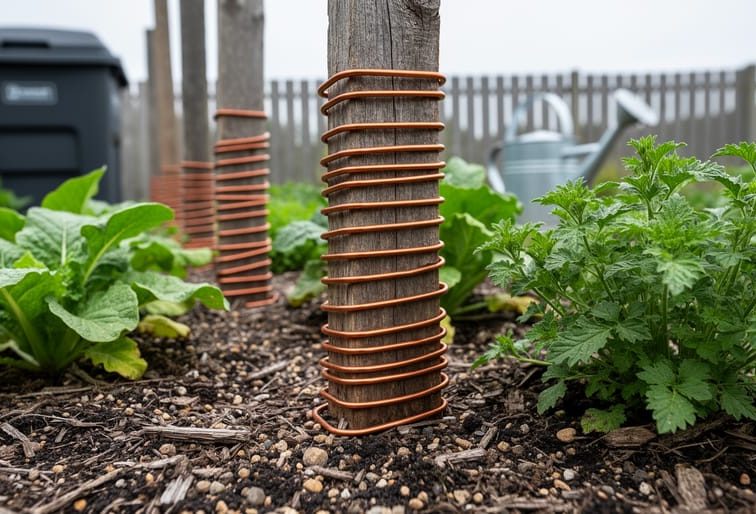

You’ve probably seen the photos: copper wire spiraling around wooden stakes, gardens supposedly thriving with minimal water or fertilizer, claims of doubled yields. Electroculture gardening has exploded across social media in 2026, promising that simple copper antennas can harness atmospheric energy to supercharge plant growth. But does it actually work, or is it just another viral gardening myth?
Here’s what we know. Electroculture isn’t new. Farmers experimented with electrical currents and magnetic fields back in the 1700s, and research continued sporadically through the 20th century with mixed results. The modern backyard version involves wrapping copper wire around wooden stakes and placing them near plants, with proponents claiming the setup captures electromagnetic energy from the atmosphere.
The honest truth? Scientific evidence supporting these dramatic claims remains thin. Most contemporary agricultural research doesn’t validate the yield increases that electroculture enthusiasts report. But here’s the thing: gardeners across Canada are trying it anyway, and some swear they’re seeing differences. Whether that’s due to electromagnetic effects, placebo, or simply paying closer attention to their plants is up for debate.
What makes electroculture compelling for many Canadian gardeners isn’t just the potential benefits. It’s affordable, simple to set up, and pairs well with existing sustainable practices like composting and overwintering perennials. Think of it as an experiment rather than a proven method. You can test it in one bed while keeping another as a control, document what you observe, and decide for yourself whether it’s worth continuing.
What Is Electroculture Gardening and Why Are Canadian Gardeners Curious?
Electroculture gardening is a technique that uses atmospheric electricity and the earth’s magnetic field to potentially boost plant growth. The basic idea is simple: copper wire antennas placed in your garden beds act as conductors, channeling natural electrical currents from the atmosphere into the soil around your plants. Proponents claim this electrical stimulation can accelerate growth, increase yields, and improve plant health without chemicals or complex equipment.
The concept isn’t brand new. Farmers and gardeners have experimented with electrical stimulation of plants since the 1700s, though early methods involved batteries and direct current. Today’s electroculture movement focuses on passive systems that simply harness what’s already in the environment. You’re not plugging anything in or creating artificial electricity, you’re working with the subtle electrical charges present in air and soil.
So why the renewed interest in 2026, especially among Canadian community gardeners? Part of it is timing. Gardeners are increasingly drawn to sustainable, low-cost methods that don’t rely on synthetic inputs. Electroculture fits that bill perfectly: a few dollars worth of copper wire and bamboo stakes is all you need to give it a try. The other appeal is the community learning aspect. Gardeners across Canada are testing these techniques together, sharing their observations, and building collective knowledge through hands-on experimentation.
Here’s the honest part: evidence is limited. You’ll find plenty of enthusiastic testimonials from gardeners who swear their tomatoes doubled in size or their pest problems vanished. You’ll also find skeptics and mixed results. Controlled scientific studies on modern electroculture methods are scarce, and the mechanisms aren’t well understood. That uncertainty doesn’t make it worthless, it makes it an open question worth exploring in your own garden beds.
Your DIY Electroculture Starter Kit: Materials You’ll Need
You’ll be relieved to know that setting up electroculture in your garden won’t break the bank or send you on a wild goose chase for exotic materials. The beauty of this technique is its simplicity: you need just a handful of affordable items that most Canadian gardeners can find locally.
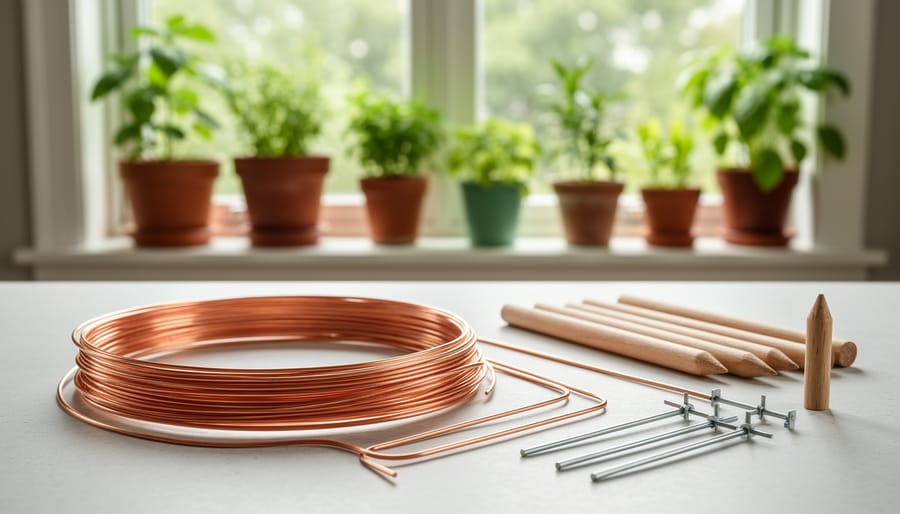
Your essential supplies start with copper wire, which is the heart of any electroculture antenna. Both solid and braided copper wire work well, typically in gauges ranging from 12 to 18. You can pick up copper wire at most hardware stores like Home Hardware, Canadian Tire, or Rona, usually in the electrical section. Expect to spend around $15 to $30 for enough wire to create multiple antennas. Online retailers like Amazon.ca also stock copper wire if you prefer shopping from home.
For supports, grab bamboo stakes or wooden dowels. Garden centres across Canada carry bamboo stakes year-round, and they’re incredibly affordable. A bundle of six-foot bamboo stakes typically runs $5 to $10. Alternatively, you can use wooden dowels from craft stores, or even salvage straight branches from your yard if you’re feeling resourceful.
The only tools you’ll need are basic items you probably already own: wire cutters or sturdy scissors to snip the copper wire to length, and maybe a pair of work gloves to protect your hands while wrapping.
That’s genuinely it. For under $30, you can gather everything needed to build several electroculture antennas and start your own garden experiment. There’s no specialized equipment, no technical knowledge required, and no reason not to give it a try this growing season. If you’re already planning a trip to your local garden centre for seeds or soil amendments, toss a bundle of bamboo stakes and some copper wire into your cart.
Building Your Electroculture Antenna: A Simple Three-Step Process
Step 1: Gather Your Materials
You’ll need just a handful of supplies, most of which you can pick up at your local hardware store or garden center. Start with copper wire (solid or braided works fine), available in various gauges at most hardware shops across Canada. Grab a few bamboo stakes or wooden supports, which you probably already have in your shed. You’ll also want wire cutters and possibly gloves if you’re handling stiffer wire. Set up a simple workspace on your patio table or garage workbench where you can comfortably coil the wire. The total cost runs under $20 for enough materials to make several antennas, making this an accessible experiment for any budget. Before you begin assembly, lay out all your materials so you can work through the wrapping process smoothly without stopping mid-coil.
Step 2: Wrap the Wire Around Your Support
Hold your bamboo stake firmly and begin wrapping your copper wire around it in a clockwise direction, starting near the bottom and working your way up. This clockwise wrapping direction matters because you’re in the Northern Hemisphere, and electroculture proponents believe this alignment with Earth’s magnetic field helps capture atmospheric energy.
As you spiral the wire upward, aim for coils spaced about half an inch to an inch apart. You don’t need precision here. The wire can be wrapped loosely or snugly, whichever feels more comfortable as you work. If your hands get tired, pause and pick up where you left off.
Some gardeners like wrapping the full length of their stake, while others create a concentrated coil in the top third. Both approaches work, so choose what feels manageable for your first attempt. If you’re using braided copper wire, you might find it easier to handle and wrap smoothly compared to solid wire.
Once you reach the top, leave a few inches of wire extending above the stake to act as the antenna point. You can shape this into a small spiral or leave it straight. Secure the bottom end by tucking it between coils or tying it with a piece of string.
Step 3: Place the Antenna Into Your Garden Soil
Now it’s time to get your finished antenna into the garden. Push the support stake firmly into the soil, aiming for 6 to 8 inches of depth. This anchors the antenna securely and ensures the copper coil sits close enough to your plants to interact with the soil’s natural electrical field.
Position your antenna within a few inches of the plant stem, but not so close that you risk damaging roots when inserting the stake. For seedlings and smaller plants, one antenna per plant works well. If you’re working with larger vegetables like tomatoes or squash, place the antenna near the base where the main roots spread out.
In row gardens, space antennas every 12 to 18 inches along the row. For raised beds or container gardens, one antenna per container or positioned centrally in smaller beds can cover multiple plants. The key is getting the antenna into the ground at the proper depth so it can interact with the earth while staying stable through wind and rain.
Don’t worry about perfect placement. Part of the experimental spirit is trying different positions and observing what happens. Some Canadian gardeners place antennas on the south side of plants for maximum sun exposure on the copper, while others tuck them into corners to avoid interference with watering and weeding. Try what makes sense for your setup, note where you placed each one, and adjust next season based on what you learn.
Testing Electroculture in Your Canadian Garden: The Experiment Approach
The best way to find out if electroculture works in your garden is to run your own side-by-side test. You don’t need lab equipment or scientific training. Just pick a few plants of the same type, treat half with antennas, and track what happens over the growing season.
Start by choosing six to ten plants that you’re growing from seed or transplanting at the same time. Tomatoes, peppers, beans, and lettuce all work well for this. Split them into two groups: your experimental plants get copper antennas installed 6-8 inches into the soil nearby, while your control plants get the same care but no antennas. Make sure both groups receive identical watering, fertilizing, and sunlight.
Here’s a simple tracking system that takes five minutes each week:
- Measure the height of each plant from soil level to the tallest growth point and record it in a notebook or spreadsheet.
- Count visible leaves, flowers, or fruit on each plant to track development stages.
- Note any signs of pest damage, disease spots, or wilting, comparing frequency between your two groups.
- Take a quick photo of both groups from the same angle each week to create a visual timeline.
- At harvest time, weigh your yields separately for antenna plants versus control plants.
Keep your notes honest. If the control plants outperform the antenna group one week, write it down. The point isn’t to prove electroculture works but to see what actually happens in your specific conditions.
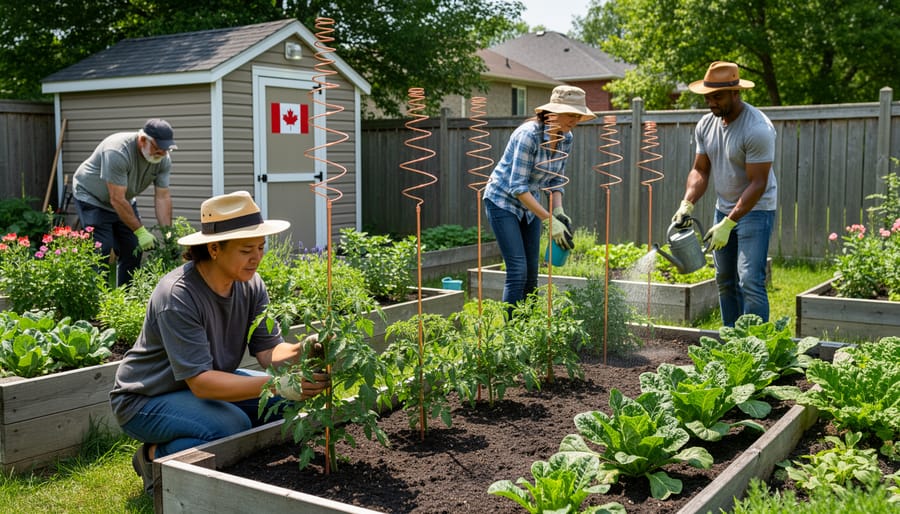
Community gardens are perfect for this kind of testing because you can coordinate with other gardeners. When five people run the same experiment with different plant varieties or soil types, you all learn more than you would alone. Share your weekly observations at garden meetings, compare photos, and discuss what you’re seeing. Maybe electroculture helps your neighbor’s beans but does nothing for your cucumbers. That’s useful information.
The collective results from your community carry more weight than any single gardener’s experience, and they’ll help everyone make informed decisions about whether electroculture deserves a permanent spot in their gardens.
Real Stories from Canadian Gardeners Trying Electroculture
Marina, a member of the Vancouver Island Community Garden, set up four electroculture antennas among her tomato plants last spring. She wrapped copper wire clockwise around bamboo stakes and tracked her results weekly. “By mid-July, the antenna-treated plants were noticeably taller than my control group,” she says. “The yields weren’t dramatically different, but I did see about 15 percent more fruit on the experimental side.”
Not everyone’s experience has been as encouraging. James from a Montreal community plot tried electroculture on his pepper plants and saw no measurable difference after eight weeks of careful comparison. “I kept detailed notes, measured everything, and honestly couldn’t tell which plants had the antennas,” he admits. “But it cost me maybe ten dollars to try, so I’m not disappointed.”
What stands out in these stories is the collaborative spirit. At the Toronto Urban Farm Collective, a group of twelve gardeners pooled their electroculture experiments across different crops: lettuce, beans, cucumbers, and herbs. They met monthly to compare measurements and photographs. Some saw modest improvements in growth rates, others noticed better pest resistance, and a few observed no change at all. The shared learning mattered more than consistent results.
Sarah from Calgary combines electroculture with smart irrigation tools to track whether the antennas affect water uptake. “I’m treating it as a multi-year experiment,” she explains. “One season isn’t enough data for me to draw conclusions, but the community conversation has been fantastic.”
These gardeners emphasize the same point: approach electroculture as a low-risk test, document your observations honestly, and share what you learn with others who are just as curious.
What to Keep in Mind: Realistic Expectations and Ongoing Questions
Here’s the big thing about electroculture: we’re still separating the hype from what actually works. The scientific community hasn’t fully studied this practice yet, and results vary wildly from garden to garden. Some Canadian gardeners swear their tomatoes doubled in size, while others noticed no difference at all.
Think of electroculture as one tool in your gardening toolkit, not a replacement for the fundamentals. Your soil still needs organic matter and good drainage. Your plants still need proper watering, appropriate sunlight, and protection from extreme weather. Copper antennas won’t fix poor soil quality or compensate for neglect.
The beauty of this experiment is its simplicity. You’re investing a few dollars in copper wire and an hour of your time. If it boosts your yields, fantastic. If nothing changes, you’ve learned something valuable and you’re out maybe the cost of a coffee. Keep notes, take photos, and measure your plants weekly. That documentation becomes part of the larger story Canadian gardeners are writing together about what works in our unique climate and soil conditions.
Whether you’re a seasoned gardener or just starting to DIY your garden electroculture offers an exciting, low-cost experiment for your 2026 growing season. With nothing more than copper wire and bamboo stakes, you can test this intriguing technique alongside your regular practices and see what happens in your own beds.
The real beauty of electroculture lies in the community learning aspect. Set up a few antennas, keep notes on your observations, and share what you discover with fellow gardeners. Whether your tomatoes thrive or your results stay modest, you’re contributing to a collective understanding of what works in Canadian soil and climate.
Start small this spring. Pick a few plants, install your copper antennas, and approach it with curiosity rather than certainty. Document your journey, connect with other gardeners trying the same experiment, and enjoy being part of a growing movement that values sustainable exploration and shared knowledge. Your garden might just surprise you, and your experience will definitely help others navigate their own electroculture experiments.