
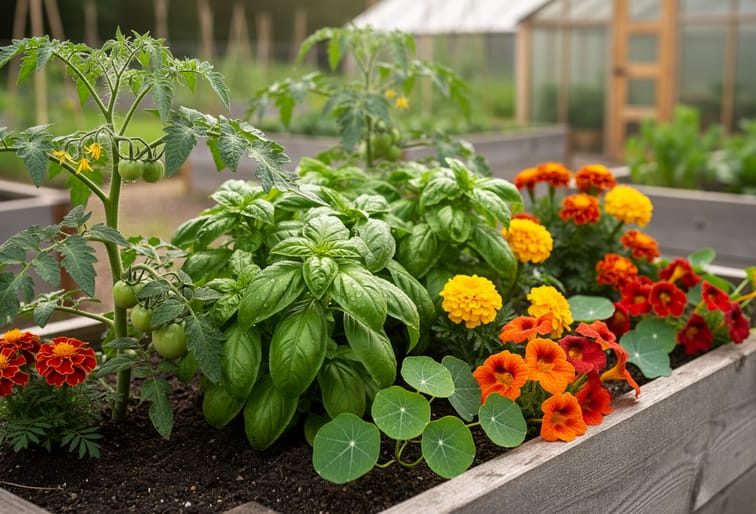

Picture this: you plant your tomatoes next to basil, and suddenly both plants thrive like never before. That’s companion planting in action, and having a reliable chart transforms this ancient gardening wisdom into something you can use every single day in your garden.
Companion gardening charts solve a simple problem. When you’re standing in your garden bed wondering what to plant where, you need quick answers. Should those carrots go near the onions? Will your beans help or hurt your peppers? A good chart gives you those answers at a glance, saving you from costly mistakes and turning your plot into a productive ecosystem where plants actually help each other grow.
The beauty of companion planting goes beyond just saving space. When you pair the right plants together, you’re creating natural pest control, improving soil health, and boosting your harvest without reaching for chemicals or fertilizers. Marigolds protect your vegetables from aphids. Beans fix nitrogen for hungry corn. Nasturtiums lure pests away from your prized crops.
For Canadian gardeners working with our unique growing conditions and shorter seasons, companion planting becomes even more valuable. Every square foot matters when you’re maximizing production in a Zone 3 garden or making the most of a community plot in Vancouver.
This guide brings you practical, tested companion gardening charts you can download today, plus real stories from Canadian gardeners who’ve transformed their yields using these simple pairings. Whether you’re planning your first raised bed or optimizing an established vegetable garden, you’ll find exactly what you need to make smart planting decisions this season.
What Is a Companion Gardening Chart (And Why Canadian Gardeners Love Them)
A companion gardening chart is your garden’s cheat sheet, a simple reference tool that shows which vegetables, herbs, and flowers grow better when planted side by side. Think of it as a matchmaking guide for plants. Instead of guessing which crops will help each other thrive, you’ve got proven pairings at your fingertips.
These charts work by organizing gardening wisdom that’s been tested over generations and backed by research. They tell you which plants attract beneficial insects, which ones repel pests naturally, and which combinations should never share a row. Most charts use a grid or table format that makes it easy to cross-reference your crops and find compatible neighbors in seconds.
Melanie Rekola, owner of Melanie Rekola Landscape Design in Ontario, explains that companion planting takes advantage of how different plants interact in nature. Some release compounds through their roots that protect nearby crops. Others provide physical benefits like shade or structural support. The chart simply maps out these relationships so you don’t have to memorize them.
Canadian gardeners have embraced these charts because they address real challenges we face in our growing season. According to Northern Wildflowers, companion planting decreases pest, disease, and weed pressure on crops, helps with water retention, and leads to higher yields and tastier fruits and vegetables. That’s a lot of benefit from one piece of paper pinned to your garden shed.
The beauty of a companion planting chart is that it’s practical. You can download a printable version and keep it right in your garden. The Old Farmer’s Almanac offers a free, research-based chart that makes finding the best vegetable pairings straightforward. No apps, no scrolling through your phone with muddy hands, just grab your chart and plan your rows.
Community gardens across Canada have picked up on this too. Manitoba’s official Community Gardener’s Guidebook includes a section on companion planting, teaching members which plants like to be grown next to each other. It’s become a standard part of how Canadian gardeners, whether planting solo or in groups, approach their beds each spring.
The Real Benefits: What Companion Planting Does for Your Garden
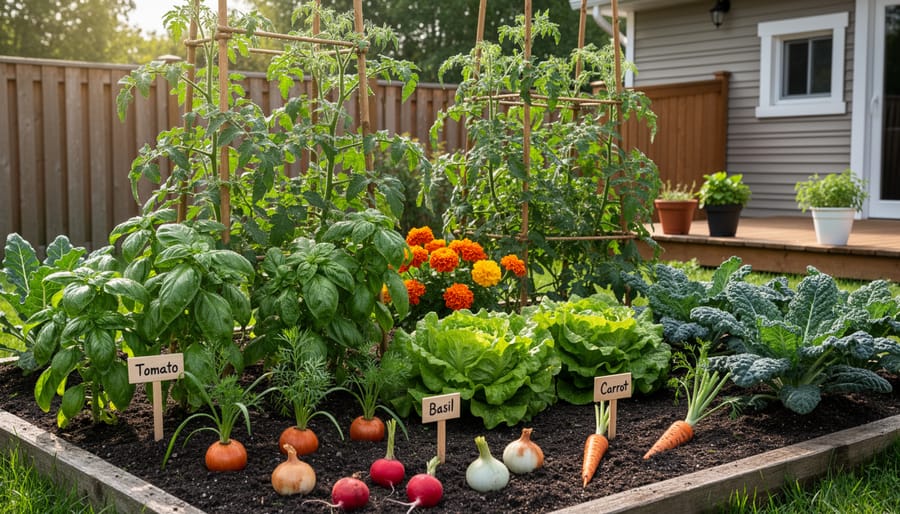
When you pair the right plants together, you’re not just following tradition, you’re tapping into science-backed strategies that make your garden healthier and more productive. The benefits go far beyond pretty rows, transforming how your vegetables grow, taste, and resist common challenges.
Here’s what companion planting actually does for you:
- Reduces pest damage: Certain plant combinations naturally repel insects or confuse them with mixed scents, cutting down on the bugs that chew through your hard work.
- Fights disease pressure: Strategic pairings improve air circulation and create less favourable conditions for fungal infections and bacterial problems.
- Suppresses weeds: Dense, well-planned combinations shade out weed seedlings and use garden space more efficiently, leaving less room for unwanted plants.
- Improves water retention: Deep-rooted companions and ground covers help soil hold moisture longer, especially valuable during dry Canadian summers and when combined with smart irrigation practices.
- Boosts yields: Plants that support each other’s nutrient needs or pollination can produce more vegetables in the same space.
- Enhances flavour: Some pairings, like tomatoes with basil, actually improve the taste of your harvest through root interactions and shared soil chemistry.
Research from Canadian gardening experts confirms these aren’t just gardening folklore. Northern Wildflowers notes that companion planting decreases pest, disease, and weed pressure while leading to higher yields and tastier produce. In community gardens across the country, these benefits become even more pronounced. When multiple gardeners coordinate their plantings using the same companion strategies, pest populations stay lower across the entire plot, water gets used more efficiently, and everyone learns from shared successes.
The sustainability angle matters, too. Fewer pests mean less need for interventions, organic or otherwise. Better water retention reduces irrigation demands. Higher yields from the same square footage mean you’re making the most of every inch of soil. For community gardens working with limited budgets and volunteer labour, these practical advantages translate directly into more food grown, more knowledge shared, and more reasons for neighbours to keep coming back season after season.
How to Read and Use Your Companion Planting Chart
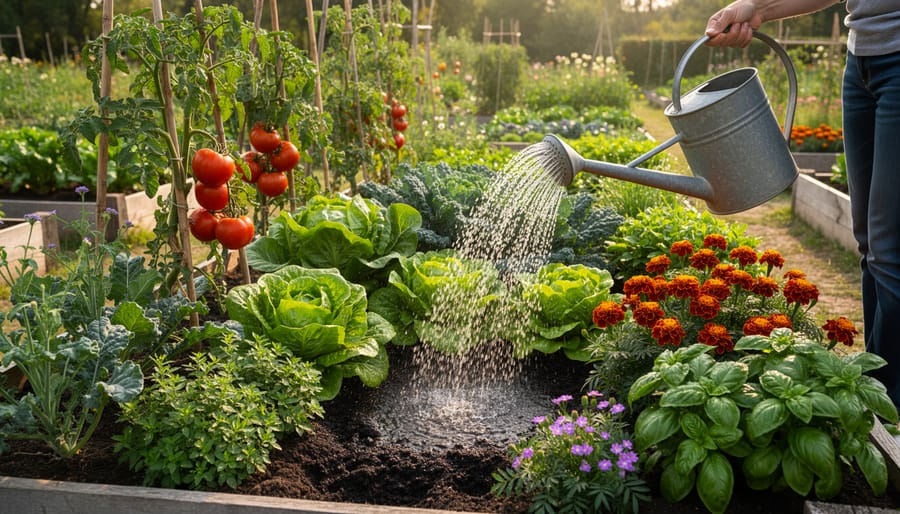
When you first look at a companion planting chart, it might seem overwhelming, rows and columns of plant names, symbols, and checkmarks. But here’s the good news: once you understand the basic layout, these charts become your garden planning best friend.
Most companion planting charts organize information in a grid format. Find your main crop along the left side or top row, then scan across or down to discover which plants make great neighbours and which ones don’t. Many charts use simple symbols, green checkmarks or plus signs for good companions, red X’s or minus signs for plants to keep apart, and sometimes a neutral marker for combinations that neither help nor harm.
Start by choosing one vegetable you’re planning to grow. Let’s say tomatoes, since most Canadian gardeners want a few in their plot. Look up tomatoes on your chart. You’ll likely see basil, carrots, and marigolds listed as beneficial companions. These aren’t just random pairings, basil helps repel aphids and may improve tomato flavour, while marigolds deter nematodes in the soil. On the flip side, your chart will show that tomatoes and members of the brassica family (cabbage, broccoli, cauliflower) don’t work well together because they compete for similar nutrients and can stunt each other’s growth.
As you plan your garden layout, sketch it out on paper first. Place compatible plants next to each other, leaving appropriate spacing between rows. If you’re growing beans, for instance, position them near carrots or cucumbers but away from onions and garlic, which can inhibit bean growth. The chart gives you these pairings, but you still need to respect each plant’s space requirements, crowding ruins even the best companion combinations.
Pay attention to plant heights too. Your chart won’t always specify this, but taller plants like corn make excellent neighbours for shade-loving lettuce in the hot weeks of a Canadian summer. Shorter crops like radishes fit nicely between slower-growing plants such as peppers, making efficient use of garden space while providing mutual benefits.
Don’t try to memorize everything at once. Pick three or four main vegetables you’re growing this season and learn their best friends and enemies. Keep your printed chart somewhere accessible, tucked into a garden journal, posted inside your shed, or laminated for weather resistance. You’ll reference it repeatedly throughout the planting season, and that’s perfectly normal. Even experienced gardeners check their charts when planning new beds or trying unfamiliar crops.

Popular Companion Planting Combinations That Work in Canadian Gardens
Some plant partnerships just work, like old friends who always bring out the best in each other. The combinations below have proven themselves in Canadian gardens from coast to coast, handling our variable springs, hot summers, and sometimes unpredictable growing seasons with grace.
**Tomatoes and Basil: The Classic Kitchen Garden Duo**
This pairing does more than taste great together on your plate. Basil planted at the base of tomato plants helps repel aphids and hornworms, two common pests that plague tomatoes across Canada. The basil’s strong scent confuses pests looking for tomato plants, while the tomato’s taller structure provides afternoon shade that prevents basil from bolting in midsummer heat. Plant basil seedlings about 12 inches from your tomato transplants once both are well-established.
**Carrots and Onions: Underground Allies**
Carrots and onions make ideal companions because they occupy different soil zones and actively protect each other. Onions emit a pungent scent that deters carrot rust flies, while carrots help loosen soil for shallow-rooted onions. Alternate rows or scatter onion sets among carrot plantings in early spring. Both crops tolerate our cooler temperatures and can be succession-planted through June in most Canadian zones.
**The Three Sisters: An Indigenous Growing System**
Corn, beans, and squash form the foundation of Indigenous agriculture across North America, and this combination thrives in Canadian community gardens. Corn provides a natural trellis for climbing beans, beans fix nitrogen in the soil that feeds the corn, and squash leaves shade the ground to retain moisture and suppress weeds. Plant corn first, add beans when corn reaches about six inches, then tuck squash seeds around the perimeter. This technique works beautifully in zones 3-6 but needs a warm microclimate or early start in shorter-season areas.
| Main Crop | Companion Plants | Benefits | Avoid Planting With |
|---|---|---|---|
| Tomatoes | Basil, carrots, marigolds | Pest deterrence, improved flavor | Brassicas, fennel, potatoes |
| Carrots | Onions, leeks, rosemary | Repels carrot flies, soil aeration | Dill, parsnips |
| Beans | Corn, squash, radishes | Nitrogen fixation, structure support | Onions, garlic, fennel |
| Lettuce | Radishes, chives, beets | Quick harvest cycles, shade tolerance | Parsley |
**Lettuce and Radishes: Fast Friends for Cool Weather**
Both lettuce and radishes love the cool conditions of Canadian springs and falls. Radishes germinate quickly and break up soil, making it easier for lettuce roots to establish. They’re also ready to harvest within three to four weeks, clearing space just as lettuce needs room to spread. Scatter radish seeds among your lettuce rows for an efficient use of space that works perfectly in raised beds or containers.
These combinations aren’t rigid rules, they’re starting points. Your garden’s microclimate, soil type, and spacing will influence results, so treat your first season as a learning year and adjust from there.
Where to Find Free, Printable Companion Gardening Charts
You don’t need to spend hours creating your own companion planting chart from scratch. Several trusted sources offer free, printable versions you can download today and take straight to your garden.
The Old Farmer’s Almanac provides what they call a “Free Printable, Research-Based” companion planting chart that’s become a go-to resource for gardeners across North America. Their chart makes it easy to find the best vegetable pairings at a glance, and you can download a printable version to keep on hand throughout the growing season. Laminate it or slip it into a plastic sleeve, and you’ve got a weatherproof reference you can consult while planting or troubleshooting your beds.
Canadian gardeners also have access to region-specific resources that address our unique growing conditions. Northern Wildflowers, a Canadian company, offers companion planting guidance tailored to northern climates. Their materials reflect the realities of shorter growing seasons and temperature swings we experience here.
If you’re part of a community garden, check whether your organization already provides companion planting charts. Many Canadian community gardens include this information in their member resources. Manitoba’s Community Gardener’s Guidebook, for example, features a dedicated section on companion planting, directing gardeners to reliable references they can use season after season.
The beauty of these free charts is their accessibility. Print one out, pin it to your garden shed wall, or keep a copy in your gardening journal. Having this information within arm’s reach means you’ll actually use it when planning your next planting cycle, rather than trying to remember which vegetables play well together. Download a chart this week, and you’ll be ready to make smarter planting decisions all season long.
Companion Planting in Community Gardens: Stories from Across Canada
Community gardens across Canada have embraced companion planting as more than just a growing technique, it’s become a teaching tool that brings gardeners together and strengthens the collective harvest. From coast to coast, these shared spaces are proving that when gardeners pool their knowledge about plant partnerships, everyone’s plot benefits.
In Manitoba, the provincial government recognized companion planting as essential enough to include a dedicated section in their Community Gardener’s Guidebook. The guide directs gardeners to learn “which plants like to be grown next to each other,” making this traditional technique accessible to newcomers joining community garden waitlists across the province. Manitoba’s approach treats companion planting not as advanced gardening wizardry, but as foundational knowledge every community gardener should have from day one.
Ontario community gardens have taken similar steps, with watershed conservation groups incorporating companion planting into broader earth-friendly gardening toolkits. These resources bundle companion planting alongside composting, mulching, and water conservation, recognizing that successful plant partnerships contribute to the whole garden ecosystem, not just individual yields.
What makes these programs work is how they turn charts and lists into living experiments. At community garden orientations across the country, experienced plot holders share what they’ve learned about basil protecting their neighbour’s tomatoes or how someone’s bean planting helped the corn two rows over. New gardeners arrive with downloaded charts in hand, but they leave with stories, observations, and the confidence to try combinations their gardening mentor swears by.
These aren’t just educational add-ons. Community gardens that formalize companion planting guidance report higher success rates among first-time growers, fewer pest complaints, and more willingness among members to experiment rather than stick to safe, single-crop rows. When a gardening community adopts companion planting as a shared practice, the collective learning curve shortens dramatically. Someone always knows why the marigolds belong near the tomatoes, and that knowledge spreads from plot to plot faster than any beetle infestation ever could.

Common Mistakes to Avoid (Even the Chart Won’t Save You From These)
Even the best companion planting chart won’t fix certain common mistakes. Here are the pitfalls to watch for, and how to sidestep them.
The biggest mistake? Treating the chart as a magic formula that replaces good gardening sense. Companion planting helps, but plants still need proper watering, adequate sunlight, and healthy soil. A chart won’t save basil planted in full shade or tomatoes drowning in clay.
Overcrowding is another trap beginners fall into. Yes, basil loves tomatoes, but cramming three basil plants around one tomato isn’t better, it just creates competition for nutrients and air circulation. Respect the spacing requirements listed on seed packets. Each plant needs room to grow, even if they’re best friends.
Ignoring incompatible pairings can undo your good intentions. Planting beans next to onions because you saw each paired with other crops? That’s trouble. Beans and onions actually inhibit each other’s growth. Double-check that both plants in your planned pairing are compatible, not just that each appears somewhere on the chart.
Some gardeners also expect instant pest control. Companion planting reduces pest pressure over time, but it’s not a guarantee. You might still see aphids on your lettuce even with chives nearby. Think of it as one tool in your toolkit, not a pest-proof shield.
Finally, don’t get so fixated on perfect combinations that you never plant anything. Start simple with a few proven pairings, observe what happens in your garden, and adjust next season. Gardening is about learning as you grow, literally.
Making Your Chart Work for You: Personalizing for Your Garden Space
Your companion planting chart is a starting point, not a rigid rulebook. The beauty of gardening lies in adapting proven principles to your actual space, whether that’s a sunny balcony, a shared community plot, or a backyard with questionable drainage. The pairings on your chart will work differently depending on where and how you’re growing.
If you’re working with containers, spacing rules shift entirely. A tomato and basil combo that needs three feet of garden bed space can thrive in a single large pot with proper support. When you plant combos in containers prioritize pairings where one plant stays compact while the other grows tall, maximizing vertical space. Lettuce tucked around the base of a pepper plant works beautifully in a pot but struggles in dense garden soil where roots compete too aggressively.
For balcony gardeners who grow veggies outdoors in limited square footage, focus on companion pairs that offer multiple benefits in tight quarters. Radishes with lettuce, for instance, give you two harvests from one container without either plant suffering. When you choose the right pots go larger than you think, crowding defeats the purpose of companion planting’s natural spacing benefits.
Keep a simple garden journal, even just notes on your phone. Mark which pairings actually worked in your zone, which failed despite the chart’s recommendation, and what surprised you. Maybe your shaded corner proved perfect for a lettuce-and-chive pairing that would bolt in full sun. Perhaps your windy rooftop garden needed taller companion plants for wind protection, not the low-growing herbs the chart suggested.
Community gardeners have an advantage here: you can compare notes with plot neighbors who share your exact microclimate. What thrives in plot 12 might struggle in plot 3 due to drainage differences, even though they’re twenty feet apart. Treat your first season with any chart as an experiment, not a final answer. By 2027, you’ll have personalized companion planting knowledge no chart could ever provide.
Whether you’ve been gardening for decades or you’re planning your very first plot this spring, a companion gardening chart is one of the most accessible tools you can have in your hands. It doesn’t require special training to understand, it costs nothing to download, and it works just as well in a tiny balcony container as it does in a sprawling community garden bed. That’s the beauty of shared gardening knowledge, it belongs to all of us.
If you haven’t already, grab a free printable chart from a trusted source like The Old Farmer’s Almanac and tuck it into your garden journal or pin it near your seed-starting station. When 2026’s growing season arrives, try a few pairings that caught your attention in this article. Plant your tomatoes with basil, tuck radishes alongside your lettuce, or experiment with the Three Sisters in a sunny corner. Keep notes on what thrives in your particular microclimate and soil. The chart is your starting point, but your garden will teach you the rest.
And don’t keep what you learn to yourself. Share your companion planting wins (and even your misses) with fellow gardeners, whether that’s at your local community plot, online, or over the fence with a neighbor. Swap stories about which combinations helped you overwinter perennials or which pairings boosted your harvest. Gardening has always been better when we do it together.
Here’s to a 2026 season full of healthier plants, tastier vegetables, and the quiet satisfaction of watching your garden thrive.


