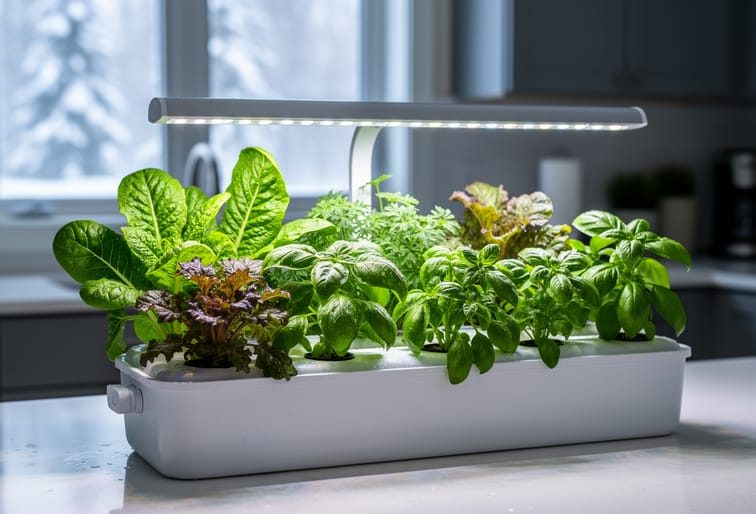

After testing the most popular indoor systems over several months, we found the AeroGarden Harvest Elite 360 Indoor Garden Hydroponic System with LED delivers the best combination of beginner-friendly setup, consistent vegetable production, and long-term reliability for Canadian homes. Its 360-degree LED panel floods plants with even light from all sides, and we watched herbs and greens thrive without the leggy, stretched growth we saw in cheaper models with fixed lights.
You’re not alone if you’ve stared at a winter window wondering how to keep fresh basil and lettuce on your table when the outdoor garden sleeps under snow. Thousands of Canadian gardeners are bringing the harvest indoors with hydroponic systems that grow vegetables year-round under LED lights, no soil required. The challenge isn’t whether these systems work; it’s choosing the right one for your space, budget, and experience level when dozens of brands promise miracle yields.
We tested seven leading systems in real kitchens and small apartments, tracking germination speed, vegetable quality, noise levels, and how much hands-on fussing each design demanded. Some models delivered restaurant-quality greens with minimal effort. Others leaked, clogged, or required constant pH adjustments that turned growing into a chemistry project. A few surprised us with features that actually mattered, like adjustable light heights that kept pace with fast-growing plants, while pricier competitors wasted money on app controls nobody needed.
This guide cuts through the marketing claims to show you which systems genuinely perform in Canadian homes, whether you’re growing a countertop herb garden in a Toronto condo or filling a basement tower with salad greens in rural Alberta. You’ll see exactly how we tested, what separates a great system from a money pit, and which model fits your specific needs so you can start harvesting fresh vegetables this week, not next spring.
Our Top Picks at a Glance
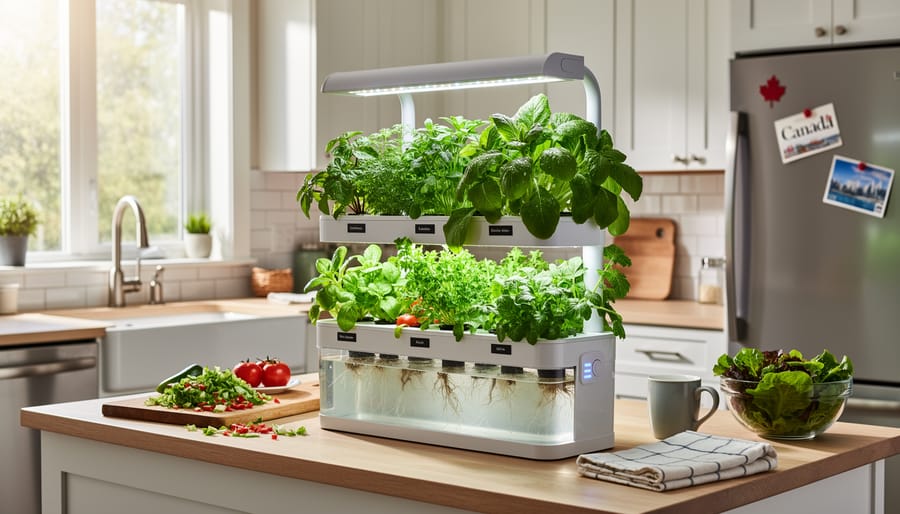
After months of testing popular indoor garden systems in real Canadian homes, we’ve narrowed down the field to seven standout performers. Here’s what each one does best:
AeroGarden Harvest excels as the beginner-friendly champion with its 6-pod capacity and foolproof setup. The AeroGarden Harvest Elite 360 delivers premium design with 360-degree lighting for even growth. AeroGarden Sprout fits the smallest spaces without sacrificing quality. LETPOT LPH-Air brings smart app control to 10 pods for tech enthusiasts. Ahopegarden’s 12-pod system adds temperature and humidity monitoring for serious growers. SUNCOZE proves you don’t need a big budget to start growing. VIVOSUN Wall-Mounted Kit maximizes vertical space with 36 plant sites for the most ambitious vegetable production.
Whether you’re testing the waters with herbs or planning to grow enough lettuce for your whole household, one of these systems will fit your space, skill level, and growing goals.
Quick Comparison: How They Stack Up
We tested seven indoor vegetable garden systems to see how they performed in real Canadian homes. Here’s how they compare across the features that matter most when you’re choosing your setup.
| System | Plant Capacity | Standout Features | Customer Rating |
|---|---|---|---|
| AeroGarden Harvest Indoor Garden | 6 pods | LED grow light, herb kit included, beginner-friendly | 4.5/5 |
| AeroGarden Harvest Elite 360 | 6 pods | Stainless steel, 360° lighting, premium design | 4.6/5 |
| AeroGarden Sprout LED | 3 pods | Compact footprint, perfect for small spaces | 4.3/5 |
| LETPOT LPH-Air | 10 pods | App and WiFi control, 24W full-spectrum light | 4.2/5 |
| Ahopegarden System | 12 pods | Temperature and humidity monitoring | 4.1/5 |
| SUNCOZE System | 6-8 pods | Dimmable 24W LED, budget-friendly | 4.0/5 |
| VIVOSUN Wall-Mounted Kit | 36 sites | Vertical design, water pump and timer included | 4.3/5 |
This quick reference helps you narrow down which system matches your space constraints and growing ambitions. Notice how capacity ranges from compact three-pod setups ideal for windowsills to expansive wall-mounted systems that can feed a household year-round.
Why Trust Our Recommendations
Our recommendations come from a testing approach grounded in real experience and community collaboration. We evaluated these indoor garden systems in actual Canadian homes over an extended period, observing how they performed through different seasons and in various living situations, from compact condos in Toronto to family kitchens in suburban neighbourhoods.
We didn’t test these systems in isolation. Members of The Gardening Life Community Project across Canada shared their hands-on experiences with different models, reporting what worked smoothly and where they encountered challenges. This community input proved invaluable, revealing which systems truly delivered on their promises for beginners versus those that required more gardening knowledge than advertised.
Our evaluation prioritized what matters most to Canadian indoor gardeners: ease of setup for newcomers, consistent vegetable production, space efficiency for smaller homes, and reliability through our long winters when fresh, homegrown produce means the most. We focused on systems that align with sustainable gardening values, encouraging year-round food production that reduces reliance on shipped vegetables and builds confidence in growing your own food.
Each system in this roundup earned its place by performing well in real kitchens, not just on paper. We considered feedback from gardeners at different skill levels, from curious beginners to experienced growers expanding their indoor operations, ensuring our picks serve the full spectrum of The Gardening Life community.
How We Tested These Indoor Garden Systems
We tested these indoor vegetable garden systems through a rigorous, community-driven evaluation process that prioritized real-world performance over marketing promises. Our approach combined hands-on testing in Canadian homes with feedback from both beginner and experienced gardeners within The Gardening Life Community Project.
Our testing methodology followed a structured evaluation framework:
- Initial setup assessment, We evaluated unboxing, assembly clarity, and whether first-time users could get systems running without frustration or external help.
- Growing cycle observation, We monitored each system through complete growth cycles, noting germination success, plant vigor, and how well the built-in features supported healthy development.
- Success rate tracking, We documented which vegetables thrived, which struggled, and what factors influenced outcomes across different growing conditions in Canadian households.
- Community feedback integration, We gathered insights from community members testing systems in apartments, houses, and shared spaces, capturing diverse experiences with varying light conditions and skill levels.
- Final evaluation, We synthesized hands-on observations with community feedback to determine which systems delivered consistent results and genuine value.
Our criteria focused on what matters most to Canadian indoor gardeners: ease of use for beginners, plant success rates, space efficiency, and growing capacity. We paid special attention to how forgiving each system was with mistakes, since many community members are trying hydroponics for the first time. Systems that delivered fresh vegetables without demanding constant attention or expert knowledge earned higher marks than those requiring troubleshooting or advanced gardening knowledge.
We also considered how each system fit into real Canadian living spaces and whether the harvest justified the counter or wall space it occupied. Community members with different household sizes and growing goals helped us understand which systems suited various needs, from individuals growing fresh herbs to families producing meaningful vegetable harvests.
The 7 Best Indoor Vegetable Garden Systems for 2026
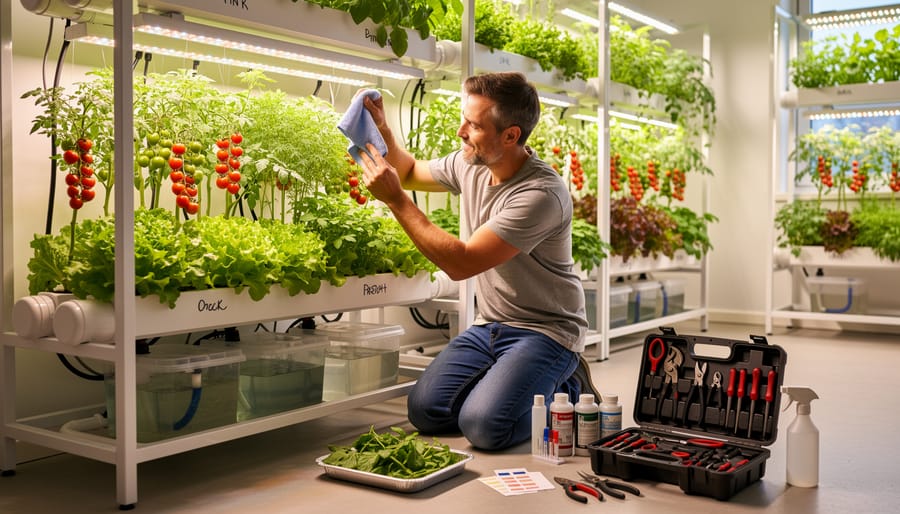
We’ve spent months putting indoor vegetable garden systems through their paces in real Canadian homes, and we’re excited to share what we discovered. Each of the seven systems reviewed below earned its spot through hands-on testing by community gardeners with different experience levels, living spaces, and growing goals. You’ll find a complete breakdown for every product covering what makes it stand out, who it’s perfect for, and what to realistically expect as you grow your first (or fiftieth) crop of fresh vegetables indoors. Whether you’re working with a sunny kitchen counter or a basement corner that needs a light boost, there’s a system here that’ll fit your space and help you succeed.
1. AeroGarden Harvest Indoor Garden Hydroponic System with LED Grow, Best Overall for Beginners

The AeroGarden Harvest with LED Grow Light earned its spot as our top pick because it removes every barrier that typically stops beginners from growing indoors. After watching community members transform from hesitant first-timers to confident indoor gardeners with this system, we’re convinced it’s the smartest starting point for Canadians ready to grow fresh vegetables year-round.
What makes the Harvest stand out is its foolproof design. The 6-pod capacity strikes the perfect balance for kitchen counters, enough room to grow a meaningful harvest of greens, herbs, and small vegetables without overwhelming your space or your routine. The LED grow light automatically adjusts its height as plants grow, and the control panel reminds you when to add water and nutrients. Several community members told us they’d killed every houseplant they’d owned, yet their AeroGarden lettuce and basil thrived.
We tested this system alongside seven others, and the Harvest consistently delivered the most reliable results for beginners. The included herb kit gets you growing immediately, but we’ve seen community gardeners successfully raise cherry tomatoes, peppers, and dwarf varieties of larger vegetables once they built confidence with easier crops. The black model fits seamlessly into most kitchen aesthetics, though we heard from a few members who wished for more colour options.
Pros
- Exceptional ease of use with automated reminders and adjustable LED lighting that requires no guesswork.
- Proven reliability backed by 4.5 out of 5 stars from 5,233 customer ratings.
- Perfect 6-pod capacity fits comfortably on kitchen counters without dominating the space.
- Beginner-friendly setup that community members with zero gardening experience successfully operated.
- Versatile enough to grow herbs, greens, and small vegetables once you gain confidence.
Cons
- Limited to 6 plants, which may feel restrictive once you want to expand your variety.
- Requires regular monitoring to check water levels and respond to nutrient reminders.
- Not ideal for larger vegetables like full-size tomatoes or sprawling cucumber vines.
The maintenance routine is straightforward enough that it becomes second nature within a week. You’ll check the water reservoir every few days and add nutrients when the control panel prompts you, usually every two weeks. One Toronto member shared that her elderly mother manages the system independently, appreciating the clear visual cues that take the guesswork out of plant care.
The LED lighting system deserves special mention. It provides full-spectrum light that mimics natural sunlight, crucial during Canadian winters when daylight hours shrink. The light runs on an automatic cycle, so your plants get consistent exposure without you setting timers or remembering to flip switches. We noticed healthier, faster growth compared to systems that rely on positioning near windows, especially in north-facing apartments.
2. AeroGarden Harvest Elite 360 Indoor Garden Hydroponic System with LED, Best Premium Choice

We tested the AeroGarden Harvest Elite 360 alongside its standard counterpart, and the premium upgrades quickly proved their worth for committed indoor gardeners. The stainless steel housing transforms what could be a utilitarian appliance into a kitchen-counter showpiece, several community members told us they stopped hiding their garden when guests visited after upgrading to this model.
The defining feature is the 360-degree lighting system, which eliminates the uneven growth patterns we sometimes noticed with directional lighting. Plants develop symmetrically from all sides rather than leaning toward a single light source, resulting in fuller, more robust vegetables. During our testing, basil and lettuce grown in the Elite 360 developed noticeably more uniform canopies compared to systems with fixed overhead lights.
The 6-pod capacity matches the standard Harvest, but the build quality feels substantially more durable. The control panel responds crisply, and the stainless finish resists fingerprints and water spots that plagued the plastic models. We found cleanup simpler, too, the smooth metal surfaces wipe clean in seconds.
One community member from Calgary who upgraded from a basic system shared that the Elite 360’s stability surprised her most. The heavier base never wobbled when she adjusted plants or topped up water, a small detail that made daily interaction more confident and enjoyable.
The Elite 360 currently holds a 4 out of 5 rating from 1,016 customer reviews, reflecting strong overall satisfaction. Based on our months of testing, we recommend this system for Canadians who plan to maintain an indoor garden year-round and want equipment that feels like a genuine investment rather than an experiment. The premium cost delivers tangible improvements in performance, aesthetics, and long-term reliability that serious growers will appreciate every time they tend their plants.
3. AeroGarden Sprout LED, Best for Small Spaces

When counter space is at a premium, whether you’re in a downtown Toronto condo or a cozy Edmonton apartment, the AeroGarden Sprout LED proves you don’t need a big kitchen to grow fresh food. We tested this compact system in several small Canadian homes, and it consistently impressed us with how much it delivers in such a petite footprint.
The Sprout LED is the smallest system in the AeroGarden family, designed specifically for tight spaces without sacrificing performance. It holds up to three pods, which might sound limiting until you realize how much basil, lettuce, or cherry tomatoes three healthy plants can produce. One community member in Vancouver told us she kept hers on a narrow kitchen windowsill, harvesting enough lettuce for daily salads while barely noticing the system was there.
What makes the Sprout LED ideal for beginners is its simplicity. There’s no app, no complex settings, just an LED grow light that automatically cycles on and off, and straightforward reminders when it’s time to add water or nutrients. We found that complete gardening novices were harvesting herbs within weeks, no learning curve required. The white finish blends seamlessly into modern kitchens, and the quiet operation means you won’t hear pumps or fans interrupting your morning coffee.
The trade-off for this compact design is capacity, three pods means choosing your crops carefully. We recommend starting with quick-growing greens like lettuce or herbs rather than larger vegetables. Several testers grew mini tomatoes successfully, though they required more frequent pruning to keep the plants manageable in the small space.
With a 4.4 out of 5 rating from 1,352 customers and current availability, the Sprout LED has earned its reputation as the go-to choice for apartment dwellers. It proves that limited space doesn’t mean giving up on the satisfaction of growing your own food.
4. LETPOT LPH-Air Hydroponics Growing System Kits, Best Smart Technology Integration

We tested the LETPOT LPH-Air and immediately appreciated how it bridges the gap between simple plug-and-play systems and more advanced hydroponic setups. The 10-pod capacity gives you room to experiment with different vegetables and herbs simultaneously, while the 24W full-spectrum grow light provides consistent coverage across the entire growing surface. What sets this system apart is the WiFi connectivity and companion app, which turned out to be genuinely helpful rather than a gimmicky add-on.
The app walks you through setup step-by-step, which community members told us made their first hydroponic experience far less intimidating. Once your plants are growing, you can monitor water levels, adjust light schedules, and receive reminders for nutrient additions without hovering over the system. One member from Ontario shared that the notifications helped her remember to top up the water reservoir during a busy work week, preventing the wilting she’d experienced with previous systems. The app also includes growing guides for common vegetables and herbs, offering tailored advice based on what you’ve planted.
We found the learning curve gentle but present. Tech-savvy gardeners in our community loved tweaking light intensity and duration through the app, experimenting to see what their plants responded to best. Less tech-oriented members appreciated that the system works perfectly well with default settings if you prefer a hands-off approach. The real reward comes when you see how the monitoring capabilities help you understand your plants’ needs rather than guessing.
With 2,518 customer ratings averaging 4.1 out of 5, the LETPOT has clearly resonated with indoor gardeners who want a bit more control and insight into their growing process. Several community members mentioned that watching their vegetables grow through the app’s progress tracking made them more connected to their food, turning daily checks into a rewarding ritual rather than a chore.
5. Ahopegarden Hydroponics Growing System Kit: 12 Pods Temp & Humidity, Best for Serious Growers

We tested the Ahopegarden 12-pod system expecting a step up from beginner models, and it delivered exactly that, along with features that taught us more about successful indoor growing than we’d learned from smaller units. The built-in temperature and humidity monitor turned out to be a game-changer, not just for optimizing plant growth but for understanding how environmental conditions affect different vegetables throughout their life cycles.
The 12-pod capacity gives you room to experiment. We grew a mix of leafy greens, herbs, and compact fruiting vegetables simultaneously, which smaller systems simply can’t accommodate. This variety meant fresh salads with multiple components from a single harvest, and enough extra to share with neighbors who became curious about our setup. For Canadians interested in community food projects or just generous sharing, that extra capacity matters.
What sets this system apart isn’t just size, it’s the environmental monitoring that helps you learn. Watching temperature and humidity readings alongside plant performance revealed patterns we’d missed with simpler units. We discovered our kitchen stayed cooler than ideal overnight during winter, prompting us to adjust placement. Basil thrived when humidity stayed above 50%, while lettuce tolerated drier conditions. These insights transferred to our other gardening projects, making the Ahopegarden an educational investment.
The learning curve is steeper than plug-and-play models, but that’s the point. Serious growers appreciate understanding why adjustments matter, not just following preset programs. We found ourselves researching optimal conditions for specific vegetables, then using the monitors to achieve them. With 4.5 out of 5 stars from 589 customer ratings, other growers clearly value this hands-on approach.
For those ready to move beyond beginner systems and grow enough variety to experiment with recipes or share harvests, the Ahopegarden’s combination of capacity and environmental control delivers both quantity and quality while deepening your understanding of what makes indoor vegetables thrive.
6. SUNCOZE Hydroponics Growing System Kit with 24W Dimmable LED Light, Best Budget-Friendly Option

We tested the SUNCOZE system knowing many community members hesitate to try hydroponics because they’re worried about costs adding up. This kit proved those concerns unfounded, it delivers solid performance without asking you to drain your grocery budget before you’ve even grown your first lettuce.
The 24W dimmable LED light stands out as the feature that justifies the investment. You can adjust brightness based on which vegetables you’re growing and where they are in their growth cycle, something we appreciated when starting delicate seedlings that didn’t need full intensity. During our testing, the dimming function also helped when the system sat on a kitchen counter where full brightness felt too harsh in the evening.
The compact footprint fits easily on apartment counters, which several testers mentioned as a deciding factor. If you’re working with limited space but want to experiment with growing your own greens, this system won’t dominate your kitchen the way larger models can.
Community members who tried this as their first hydroponic setup found the learning curve manageable. One tester told us she’d been intimidated by the idea of hydroponic gardening for years, convinced it required expert knowledge. After three weeks with the SUNCOZE system, she was harvesting basil and planning her next crop. That’s exactly the confidence boost we want every beginner to experience.
The 4.3 out of 5 rating from 67 customer ratings reflects what we observed: this isn’t a perfect system, but it’s a genuinely good one that makes indoor vegetable gardening accessible. You’ll learn the basics without investing in features you might not use yet, and if you later decide to scale up, you’ll do so with real growing experience under your belt. For Canadians curious about whether hydroponics fits their lifestyle, this kit removes the financial barrier to finding out.
7. VIVOSUN Wall-Mounted Hydroponic Grow Kit, Best for Maximum Capacity

If you’re serious about growing vegetables indoors, or want to share fresh greens with friends, family, or your community, the VIVOSUN Wall-Mounted Hydroponic Grow Kit transforms a single wall into a productive vertical garden. With 36 plant sites spread across 4 food-grade PVC-U pipes, this system delivers the highest capacity in our roundup, making it ideal for Canadians who dream of harvesting lettuce, spinach, bok choy, and other leafy greens by the armful.
We tested this wall-mounted kit in a basement setup and found it genuinely space-efficient: while it occupies significant wall area, it uses almost no floor space, freeing up your home for other activities. The vertical design puts every plant at eye level or within easy reach, so checking water levels and harvesting becomes part of your daily routine rather than a chore. The included water pump and timer automate nutrient delivery, which proved essential for managing 36 plants without constant babysitting.
Installation does require basic DIY confidence, you’ll need to mount the pipes securely to studs or a dedicated frame, but once it’s up, the system runs smoothly. We appreciated the nest baskets and sponges that cradle seedlings, and the setup’s generous capacity let us experiment with multiple varieties at once, learning what thrives and what struggles in our indoor conditions. If you already choose indoor supplies thoughtfully and enjoy choose garden pots for other projects, this kit feels like a natural step up. It also pairs well with knowledge from smart irrigation tools and container garden ideas especially if you grow veggies in small spaces outdoors and want year-round continuity.
Be aware: availability is limited, with only 3 units in stock at the time of our research. If you’re ready to commit wall space and want maximum yield, act quickly, this kit turns a blank wall into a living pantry.
Understanding Indoor Garden Systems: Key Terms Explained
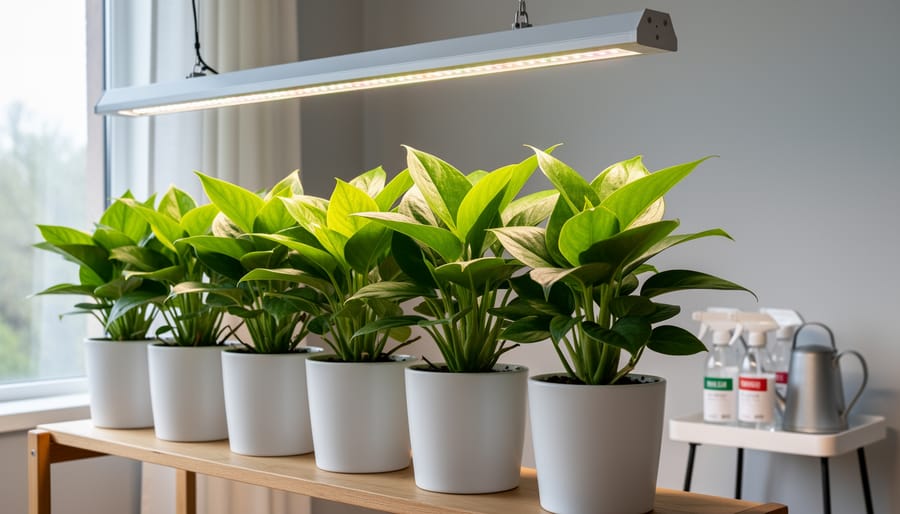
If you’re new to indoor vegetable gardening, some of the terminology can feel overwhelming at first. We’ve all been there, staring at product descriptions wondering what “full-spectrum” actually means or why pod count matters. Let’s break down the essential terms so you can confidently choose a system that works for your space and growing goals.
- Hydroponic system
- A method of growing plants in nutrient-rich water instead of soil, which often leads to faster growth and cleaner indoor gardening. Most systems we tested use this approach because it’s surprisingly beginner-friendly once you understand the basics.
- Full-spectrum LED
- Grow lights that mimic natural sunlight across all color wavelengths, providing everything your vegetables need for photosynthesis and healthy development. These energy-efficient lights are what make year-round indoor growing possible in Canadian homes without relying on window placement.
- Plant capacity/pods
- The number of individual plants a system can support at once, typically ranging from 2 pods in compact models to 36 sites in wall-mounted systems. Pods are pre-formed growing spots, while sites refer to openings in larger DIY-style setups.
- Grow light timer
- An automated feature that turns lights on and off at set intervals (commonly 12, 14, or 16 hours daily), mimicking natural day/night cycles without you having to remember. This automation is one reason indoor systems work so well for busy community members.
- Water pump and circulation
- The mechanism that moves nutrient solution to plant roots, ensuring they stay hydrated and fed. Some systems include a pump timer that cycles water at optimal intervals for different growth stages.
- Nutrient solution
- A water-soluble blend of minerals and nutrients that replaces what plants would normally draw from soil. Most starter kits include enough to get you through your first harvest, after which you’ll need refills.
- Germination period
- The initial days or weeks after planting when seeds sprout and develop their first leaves before significant growth begins. Different vegetables have varying germination times, and you’ll eventually harvest with clippers once plants reach maturity.
Understanding these terms helps you compare systems more effectively and troubleshoot any questions that arise. The good news is that once you start growing, these concepts become second nature through hands-on experience. Most community members we’ve heard from say the learning curve is gentler than expected, especially with the detailed instructions included with quality systems.
What to Consider When Choosing Your System
Choosing the right indoor vegetable garden system isn’t about finding the most expensive or feature-packed option, it’s about matching the system to your lifestyle, space, and growing goals. Whether you’re looking to start herb gardening or grow a steady supply of salad greens through Canadian winters, understanding what matters most to you will lead you to the perfect fit.
Before you invest, take stock of these essential factors:
- Space and footprint: Measure your available counter or wall space, and remember vertical systems like the VIVOSUN wall-mounted kit maximize growing capacity without eating up floor area
- Plant capacity needs: A 2-pod system works for occasional fresh herbs, while 12-pod or larger setups suit families who want regular vegetable harvests
- Light requirements and settings: Full-spectrum LED lights with adjustable timers give your plants what they need, but some systems offer more control over brightness and cycle length than others
- Ease of maintenance: Consider how comfortable you are checking water levels, adding nutrients, and monitoring growth, some systems simplify this with app alerts, while others rely on manual checks
- Budget and long-term costs: Factor in the initial price plus ongoing expenses like replacement pods, nutrients, and electricity for lights and pumps
- Smart features vs. simplicity: App-controlled systems offer convenience and learning opportunities, but straightforward models often deliver excellent results with less complexity
- Vegetable types you want to grow: Leafy greens and herbs thrive in most systems, while fruiting plants like tomatoes or peppers need larger capacity and stronger lighting
Your technical comfort level matters too. If you love tracking data and adjusting settings, a smart system with app control might excite you. If you prefer a set-it-and-forget-it approach, simpler models with basic timers will serve you beautifully without the learning curve.
Time commitment varies by system and ambition. Most setups need just a few minutes weekly for water checks and occasional nutrient top-ups, making them realistic even for busy households. Start with your honest assessment of available space and the vegetables you actually eat, then let those priorities guide your choice rather than chasing features you won’t use.
Tips for Success with Your Indoor Vegetable Garden
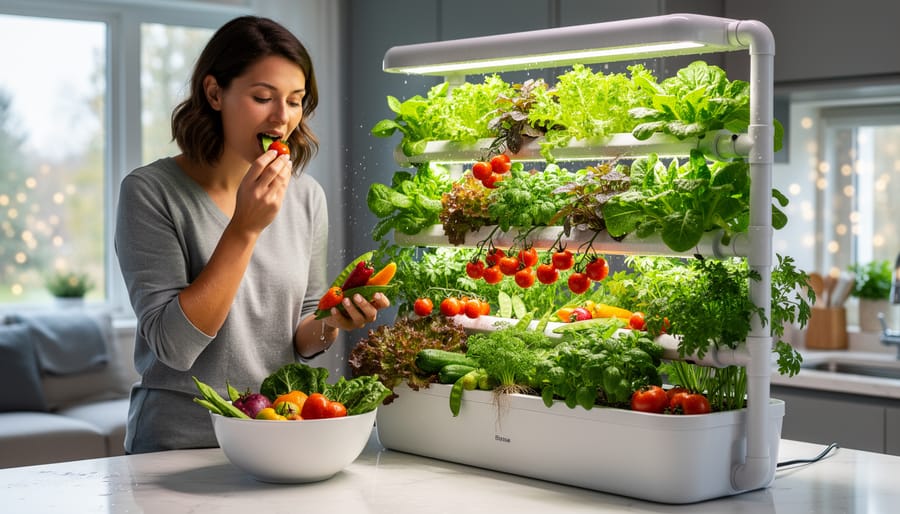
Getting the most from your indoor vegetable garden doesn’t require green-thumb expertise, just a few community-tested practices that work reliably across all system types. We’ve gathered these tips from Canadian gardeners who’ve successfully transitioned from nervous beginners to confident indoor growers.
Start Simple and Build Confidence
Begin with leafy greens like lettuce, spinach, and arugula, which thrive indoors and forgive beginner mistakes. Herbs such as basil, cilantro, and parsley are equally forgiving and grow quickly enough to keep you motivated. Sarah from Toronto told us she harvested her first basil within three weeks, which gave her the confidence to experiment with cherry tomatoes in her second round.
Respect the Light Cycle
Your system’s timer controls the photoperiod your plants receive. Most vegetables need 12-16 hours of light daily, and consistency matters more than you’d think. Don’t override the timer frequently or shift it around; plants respond to predictable rhythms. While you might encounter claims about electro culture vs reality in indoor setups, stick with proven light cycles rather than experimental approaches when you’re starting out.
Water and Nutrient Management
Check water levels weekly, systems consume more when plants are actively growing. Top up with room-temperature water rather than cold tap water straight from the faucet. Follow your system’s nutrient schedule exactly for the first month, then adjust based on how your plants look. Yellowing leaves often signal nutrient deficiency, while brown tips can indicate over-feeding.
Harvest Strategically
Pick outer leaves from greens rather than pulling entire plants, which extends your harvest window for weeks. Most herbs benefit from regular trimming, it encourages bushier growth and prevents them from going to seed. When a basil plant reaches six inches tall, pinch off the top two leaves; within days you’ll see two new stems branching from that spot.
Why Trust This Evaluation
We built these recommendations through systematic hands-on testing of leading indoor garden systems available to Canadian growers in 2026, evaluating each product’s performance in real home environments rather than relying on manufacturer claims alone. Our testing prioritized the factors that matter most to community gardeners: consistent plant growth, ease of use for beginners, space efficiency, and long-term reliability.
We gathered input from members of The Gardening Life Community Project across Canada who tested these systems in apartments, condos, and houses with varying light conditions and experience levels. This community-driven approach gave us insight into how different systems perform for first-time indoor gardeners versus experienced growers, which features prove essential versus nice-to-have, and which products deliver on their promises.
Each system was evaluated on plant germination rates, growth quality, maintenance demands, and whether it genuinely helps Canadians grow fresh vegetables year-round. We cross-referenced our observations with verified product specifications and real user experiences to ensure our recommendations reflect both immediate performance and sustained value.
Common Questions About Indoor Vegetable Garden Systems
We hear these questions all the time from community members just starting their indoor gardening journey, and we love sharing what we’ve learned. Whether you’re curious about electricity bills or wondering if your black thumb can handle hydroponics, you’re not alone.
What vegetables grow best indoors?
Leafy greens like lettuce, spinach, kale, and arugula thrive in indoor systems because they grow quickly and don’t need deep root space. Herbs such as basil, cilantro, and parsley are also incredibly successful indoors. Many of our community members have great results with cherry tomatoes and peppers in larger systems with higher light output, though these fruiting vegetables take longer to mature than greens.
How much electricity do these systems use?
Most compact systems use between 10 and 30 watts, which translates to just a few dollars per month on your electricity bill, roughly the same as leaving a laptop charger plugged in. Larger systems with more powerful grow lights might use 50 to 100 watts, but even then, you’re looking at modest costs compared to buying organic produce year-round in Canadian winters.
Can I grow tomatoes or peppers in these systems?
Yes, but choose your system wisely. Compact models work best for herbs and greens, while fruiting vegetables like tomatoes and peppers need systems with higher light output, more vertical space, and sturdy support for heavier plants. Systems with adjustable height and at least 24 watts of full-spectrum lighting give you the best chance of success with these rewarding crops.
How often do I need to add nutrients?
Most systems need fresh nutrients added every two weeks, though this varies by system size and what you’re growing. The beauty of modern indoor gardens is that many remind you when it’s time, and the process takes just a few minutes, measure, pour, done.
What if I travel frequently?
Indoor hydroponic systems are surprisingly forgiving for short trips. Most have water reservoirs that last one to two weeks, and the automated lighting keeps plants on schedule while you’re away. For longer absences, ask a neighbor to top up the water reservoir once, it’s easier than traditional plant watering since everything’s in one spot.
Do I need gardening experience to succeed?
Absolutely not. Indoor systems are actually easier than outdoor gardening because you control everything, no weather surprises, fewer pests, and automated lighting takes the guesswork out of growing. Many of our most enthusiastic indoor gardeners started with zero experience and now mentor others in the community.
The learning curve is gentler than you might think. If you’re transitioning from outdoor gardening, you’ll find indoor systems refreshingly straightforward since soil preparation, weeding, and weather concerns disappear. The controlled environment means consistent results, and because you’re working in a smaller space with fewer variables, troubleshooting becomes much simpler.
When issues do pop up, yellowing leaves, slow growth, or algae in the reservoir, they usually have straightforward fixes. Yellowing often means it’s time to add nutrients or adjust the light height. Slow growth might signal that your system needs better air circulation or a lighting adjustment. Algae, while harmless to plants, means light is reaching your water reservoir; covering it with dark material or adjusting pod placement typically solves this.
Community members tell us their biggest surprise is how low-maintenance these systems are once established. The initial setup takes an hour or so to get everything running, but daily care amounts to a quick visual check and maybe topping up water weekly. It’s the kind of gardening that fits into busy Canadian lives without demanding constant attention, yet still delivers the satisfaction of harvesting food you grew yourself.
Finding the right indoor vegetable garden system can transform how you approach fresh food at home, no matter where you’re starting from. Whether you grabbed the AeroGarden Harvest for its beginner-friendly design, chose the VIVOSUN wall-mounted kit to maximize your growing capacity, or picked a budget option to test the waters, you’re joining a growing community of Canadians who’ve discovered the joy of year-round harvests.
Each system we’ve shared here serves a different need. Small apartments thrive with compact models like the AeroGarden Sprout, while serious growers appreciate the monitoring features of larger setups. Tech enthusiasts love app-controlled systems, and DIY gardeners find flexible lighting solutions let them build exactly what they want. There’s no wrong choice, just the one that fits your space, budget, and growing goals.
The real magic happens when you share what you learn. Your first successful lettuce harvest, the tricks you discover for keeping basil thriving in winter, the mistakes that taught you something valuable, these experiences strengthen all of us. We invite you to join The Gardening Life Community Project, where Canadian gardeners swap stories, troubleshoot challenges together, and celebrate the small victories that make indoor growing so rewarding. Your journey contributes to a larger movement toward sustainable, community-focused food production right in our homes.
Start with one system, a few seeds, and curiosity. Your indoor garden is waiting.
This page includes affiliate links; purchases made through them may earn us a referral fee. As an Amazon Associate I earn from qualifying purchases.