
Picture this: you’re scrolling through seed catalogs in January, dreaming of tomatoes and dahlias, when you spot those mysterious little numbers. Zone 5. Zone 8. What do they mean, and why does every plant label seem to whisper about them?
The USDA Plant Hardiness Zone Map divides North America into 13 zones based on average annual minimum winter temperatures. Each zone represents a 10-degree Fahrenheit difference, helping you figure out which perennials, trees, and shrubs can survive winter in your garden. For Canadian gardeners, this map matters just as much as our own Canadian zone system because so many seed companies, online plant shops, and gardening resources use USDA zones as their reference point.
Here’s where it gets interesting in 2026. Climate patterns are shifting, and gardeners across the border are swapping stories in online communities about plants that suddenly thrive where they once struggled. That tomato variety your cousin in Vermont raves about? Understanding zones helps you know if it’ll work in your Ottawa backyard.
The beauty of zones is their simplicity. You find your number, match it to plant tags, and you’re halfway to success. But zones tell only part of the story. They measure cold hardiness, not summer heat, rainfall, or those surprise late-spring frosts that break a gardener’s heart.
Think of the zone map as your starting point, not your rulebook. Pair it with local knowledge from community gardens, neighbors who’ve been growing for decades, and your own experiments. That’s where real gardening wisdom lives.
What the USDA Gardening Zones Map Actually Tells You
The USDA map does one thing brilliantly: it tells you the coldest your garden is likely to get in an average winter. Specifically, it’s built on average annual extreme minima which sounds technical but just means the lowest temperature recorded each year, averaged over decades of weather data. That single number determines which perennial plants can survive winter in your location.
The map divides North America into zones based on 10-degree zones and 5-degree halves. Zone 3a runs from -40 to -35 degrees F, while 3b spans -35 to -30 degrees F. Each full zone (like Zone 5) covers a 10-degree range, and the half zones (5a and 5b) split that into 5-degree increments. When a plant tag says “hardy to Zone 5,” it means that perennial should survive winters where temperatures don’t drop below -20 degrees F.
This system became the gold standard because it’s simple, measurable, and remarkably useful for the most critical question every gardener asks: will this plant make it through winter? Nurseries stamp zone numbers on plant tags, seed companies list them in catalogs, and gardening books reference them constantly. It’s a shared language that connects growers across thousands of miles.
But here’s what makes it relevant for Canadian gardeners in 2026: U.S. nurseries ship north, online plant communities default to USDA zones, and many of the perennials you’re considering were tested and rated using this American system. Understanding how it works helps you translate those recommendations for your own garden, even though Canada has its own hardiness map that we’ll explore next.

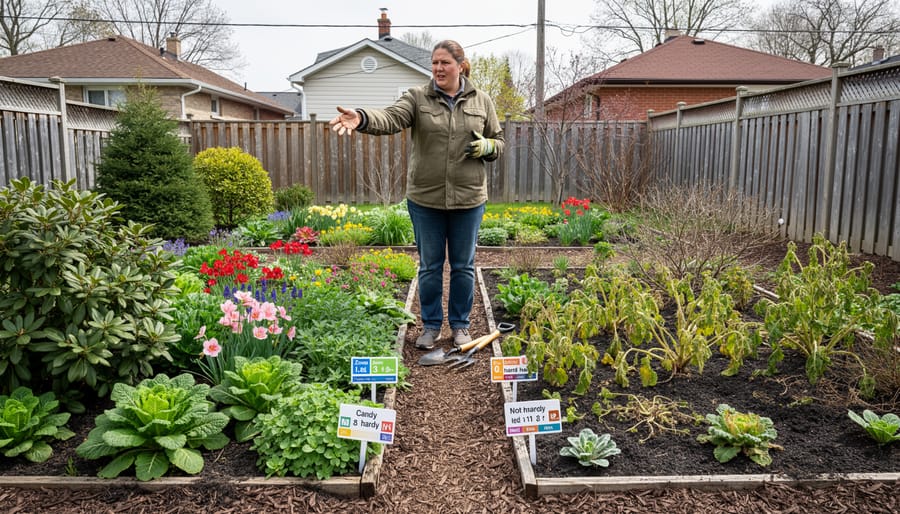
The 2023 USDA Map Update: What Changed and Why It Matters
The updated map represents the most significant improvement to the USDA system in over a decade. While the 2012 edition served gardeners well, the 2023 USDA hardiness update incorporates 30 years of temperature data (1991-2020), compared to the previous version’s 1976-2005 dataset. That three-decade shift captures more recent climate patterns, including the warming trends many of us notice in our own gardens.
For Canadian gardeners, the zone shifts in northern U.S. states carry real implications. Many border regions, think Vermont, upstate New York, northern Minnesota, and parts of Washington state, now appear a half-zone warmer than before. This matters when you’re browsing a Michigan nursery’s online catalog or following growing advice from a gardener in Buffalo. Plants labeled hardy to zone 5a on the old map might now show as 5b compatible, expanding your potential plant palette when shopping south of the border.
The 2023 map also delivers better resolution. Enhanced geographic detail means you can pinpoint your location more accurately, which helps when you live near zone boundaries or in areas with varied topography. The improved data collection methods reduce guesswork, giving you more confidence when that U.S. seed company lists “zones 4-8” on the packet.
Here’s the practical takeaway: if you’ve been using zone information from older gardening books or websites that reference the 2012 map, those recommendations might be slightly off now. The changes aren’t dramatic, we’re talking half-zone shifts in most affected areas, but they’re enough to influence whether that borderline-hardy shrub you’ve been eyeing will likely survive your winters.
How Canadian Gardeners Actually Use the USDA Map
You probably use the USDA map more than you realize, even if you’ve never deliberately looked it up. Every time you scroll through an American seed company’s website, and let’s be honest, many of the best online nurseries and specialty growers are south of the border, those zone numbers next to each plant listing matter. A perennial listed as “hardy to zone 5” gives you instant information about whether it’ll survive a Canadian winter in your garden, once you know your rough USDA equivalent.
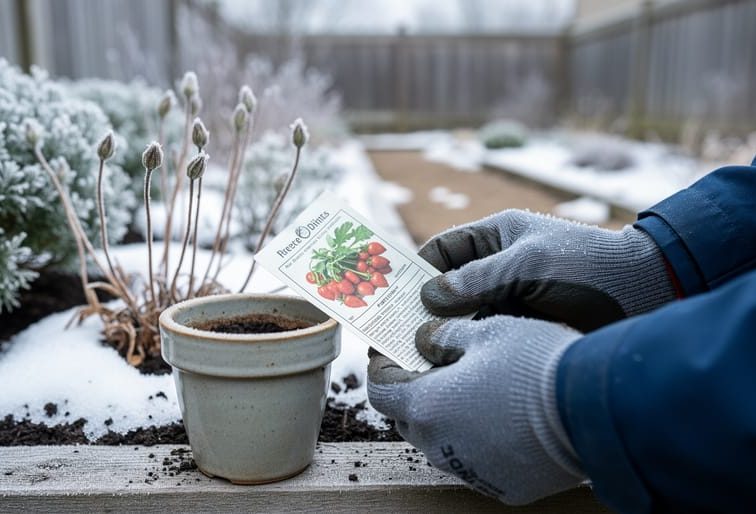
Seed packets are another everyday encounter. Whether you’re buying heirloom tomatoes or trying a new flower variety, the back of the packet often references USDA zones for outdoor planting guidance. Understanding what “zone 4-9” means helps you time your sowings correctly and set realistic expectations, especially when you’re experimenting with something new or designing with containers that might need winter protection.
Online gardening communities have become invaluable resources in 2026, but they present a zone translation challenge. Most Facebook groups, Reddit forums, and YouTube channels default to USDA zones because of the sheer number of American gardeners. When someone shares that their daylilies thrive in zone 6, or warns that a particular rose barely survived zone 4, you need to mentally convert that to your Canadian zone to gauge relevance. It’s become a kind of bilingual skill among Canadian gardeners.
Gardening books and videos follow the same pattern. Even Canadian-published resources sometimes reference USDA zones alongside our own system because it’s such a universal language among gardeners. When you’re watching a propagation tutorial or reading about pruning techniques, those zone references help you assess whether the advice applies to your climate.
The real trick isn’t just knowing your USDA zone, it’s using that knowledge as a conversation starter with fellow gardeners across North America. When you’re asking for advice about which varieties to choose garden pots for, mentioning both your Canadian and USDA zones gets you better, more specific recommendations from a wider community.
Canada’s Plant Hardiness Zone Map: Your Primary Tool
While the USDA map gets most of the attention online, Canadian gardeners have an even better resource waiting for them: Canada’s official Plant Hardiness Zone Map. This system was purpose-built for our unique climate, and it’s worth getting familiar with how it works and why it matters for your garden’s success.
Canada’s zone map takes a more comprehensive approach than its American cousin. Instead of relying solely on winter minimum temperatures, the Canadian system considers eight different climate variables that affect plant survival. These include frost-free periods, summer rainfall, maximum temperatures in the warmest month, snow cover, January rainfall, maximum wind speed, and more. This multi-factor approach makes sense when you think about Canada’s climate extremes, a plant that can handle cold might still struggle with our short growing season or lack of consistent snow insulation.
| Feature | USDA System | Canadian System |
|---|---|---|
| Primary measure | Average annual extreme minimum winter temperature only | Eight climate variables including winter temps, frost dates, rainfall, wind |
| Zone numbering | Zones 1-13 (higher = warmer) | Zones 0-9, with a and b subdivisions |
| Best for | Quick reference, U.S. plant labels | Accurate predictions for Canadian conditions |
The zone numbering works differently too. Canadian zones run from 0 (the coldest areas in the Arctic) to 9 (the warmest spots in coastal British Columbia), with each zone divided into a and b subzones. A Zone 5a garden in Ontario faces different challenges than a USDA Zone 5 garden in Pennsylvania, even though the numbers sound similar.
Accessing the Canadian map is straightforward. Natural Resources Canada maintains an interactive online map that lets you search by postal code or click directly on your location. The 2026 version of the website is user-friendly and works well on mobile devices, which is handy when you’re browsing at the nursery trying to decide if that gorgeous clematis will make it through your winters.
The Canadian system’s strength lies in its realism. A plant rated for Canadian Zone 4 has proven it can handle not just cold temperatures, but also our particular combination of snow cover patterns, spring freezes, and summer conditions. That’s information you can trust when you’re investing time and money into perennials for your garden or community plot.
Finding Your Zone: A Practical Walkthrough for Canadian Gardeners
Finding your Canadian hardiness zone is easier than you might think, and knowing both your Canadian zone and the USDA equivalent opens up a world of gardening possibilities.
Start with Canada’s official Plant Hardiness Zone website at planthardiness.gc.ca. The interactive map lets you search by postal code, city, or by clicking directly on your region. Within seconds, you’ll discover your zone number, something like 5a or 6b, which tells you what perennials can survive your winters. The site factors in more than just cold temperatures, considering variables like frost-free days, summer rainfall, and wind patterns that affect plant survival.
Once you know your Canadian zone, finding the USDA equivalent helps you interpret American gardening resources. Generally, Canadian zones run about one number lower than comparable USDA zones because our system is more conservative. If you’re in Canadian zone 5b, you’ll often see similar winter minimums to USDA zone 6a. The USDA map at planthardiness.ars.usda.gov lets you explore border regions, though it focuses primarily on U.S. locations.
Here’s what to do with this information: use your Canadian zone as your primary guide for plant purchases and decisions about overwintering perennials. When browsing U.S. seed catalogs or watching gardening videos that reference USDA zones, mentally adjust by one zone cooler for safety.
Don’t forget about microclimates in your own garden. That south-facing wall might create a pocket half a zone warmer, while the shaded north corner stays cooler. Notice where snow melts first in spring and where frost lingers in fall. Talk to neighbors and community garden members about what thrives in their yards, their real-world experience beats any map. Your local garden club or community garden is an invaluable resource for understanding what actually grows well in your specific neighbourhood, regardless of what the official zone suggests.
Beyond the Zone Number: What the Map Doesn’t Tell You
Here’s your zone number, now what? While zone maps are invaluable starting points, they tell only part of your garden’s story. These maps measure one factor: the average coldest winter temperature your area experiences. They don’t capture summer heat intensity, rainfall patterns, humidity levels, soil composition, or those tricky microclimates hiding in your yard where certain spots stay warmer or cooler than your official zone suggests.
This means a tomato that thrives in zone 5 New Brunswick might struggle in zone 5 Alberta because the maps ignore crucial differences in summer growing conditions, daylight hours, and moisture. That gorgeous Japanese maple rated for your zone might sulk if planted in heavy clay soil or bake in a reflected-heat trap against your south-facing wall. Your garden’s success depends on understanding these hidden variables alongside the zone number.
This is where your community garden friends become invaluable resources. They’ve already tested which “zone-appropriate” plants actually flourish in your specific neighbourhood’s conditions and which ones disappointed despite matching the map. Ask about rainfall, does your area need smart garden irrigation strategies to compensate for dry summers? Which microclimates exist in shared plots? What soil amendments make the biggest difference locally?
Seasoned gardeners in your area know that the sheltered corner near the compost bins stays frost-free longer, or that the windy western edge needs hardier selections than the zone suggests. They’ve figured out which plants from warmer zones survive with winter protection, and which cold-hardy plants fail because summer humidity invites disease. This collective wisdom, built through seasons of real-world trials, transforms zone numbers from abstract guidelines into practical growing success.
Putting Zone Knowledge to Work in Your Community Garden
Community gardens transform zone knowledge from abstract numbers into shared success stories. When everyone understands which plants will reliably survive winter in your collective space, the group can invest in long-lived perennials that return stronger each season, rather than replanting annuals every spring.
Start by mapping your garden’s collective zone and creating a “proven performers” list based on member experiences. At the Parkdale Community Garden in Toronto (Zone 6a), members keep a shared document of which perennials have thrived for multiple years, burgundy coneflowers, daylilies, bee balm, and Siberian iris top their list. This institutional memory saves new members from costly trial-and-error purchases.
Zone awareness makes seed swaps dramatically more useful. Instead of swapping any seeds, participants can focus on varieties suited to their shared climate reality. Members tag seeds with zone information and growing notes, so someone receiving tomato seeds knows they’re proven winners for Zone 5b conditions, not just hopeful experiments. One garden in Winnipeg created color-coded seed envelopes, green for “thrives here,” yellow for “needs extra care,” red for “risky in our zone.”
For mentoring newcomers, zones provide a common language. Experienced gardeners can guide beginners toward foolproof choices rather than watching them struggle with borderline plants. When you’re designing a perennial border along your garden’s fence line, selecting zone-appropriate plants means the entire community enjoys that beauty for years without constant replanting.
The Vancouver Island Community Garden Network coordinates bulk orders of bare-root perennials each spring, negotiating better prices because members collectively know which zone-rated plants they want. This shared knowledge builds both community bonds and genuinely sustainable gardens.
Understanding your hardiness zones, whether you’re checking the USDA map for that tempting heirloom variety from a Vermont nursery or consulting Canada’s own system for your backyard, isn’t just about avoiding plant losses. It’s about joining a growing community of gardeners who share knowledge across borders, make confident choices, and build resilient, sustainable gardens that thrive year after year.
The real magic happens when you take this knowledge into your community garden, swap seeds with neighbours who understand your zone’s quirks, and pass along what you’ve learned to someone planting their first perennials. Zones give us a common language, but local experience teaches us the nuances no map can capture.
So grab your zone number, share your successes (and your surprising survivors), and keep experimenting. Every garden teaches us something new about what’s possible when we combine solid information with community wisdom. Your zone isn’t a limitation, it’s your starting point for discovery.