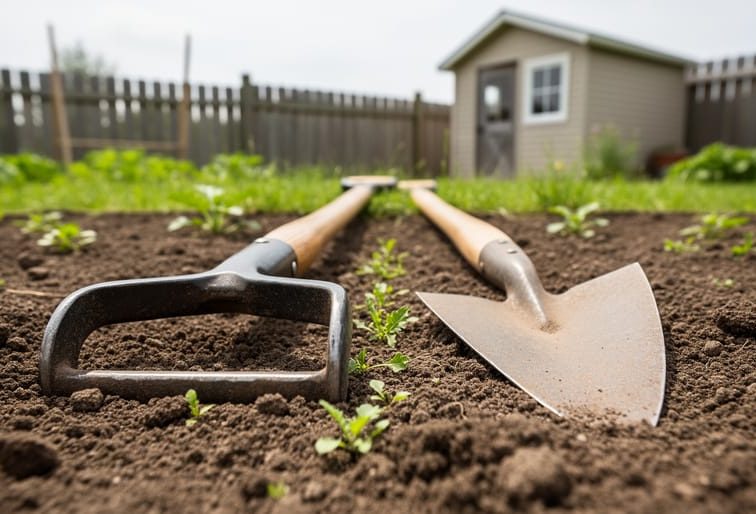

The right gardening hoe transforms back-breaking weeding and soil prep into efficient, satisfying work. For most gardeners in 2026, a stirrup hoe (also called a scuffle hoe) handles the bulk of weeding tasks, while a traditional blade hoe excels at making furrows and breaking up compacted soil. If you’re managing a community plot or backyard garden, you’ll want both styles in your shed, but the Hoe and Cultivator Gardening Hand Tools offers excellent versatility as a starting point.
Choosing your first hoe can feel overwhelming. Walk into any garden center and you’ll face dozens of options: long handles, short handles, triangular blades, loop blades, and everything in between. The truth is, most gardeners need only two or three well-chosen hoes to handle every task from spring bed prep to mid-summer weed control.
At the Saskatoon Community Gardens last season, I watched a newcomer struggle with a rusty hoe she’d inherited, the blade so dull it pushed weeds around instead of cutting them. After swapping to a sharp, properly-sized tool, she cleared her entire plot in half the time. That’s the difference the right hoe makes.
This guide walks you through the key factors that actually matter when selecting a hoe: blade shape, handle length, weight distribution, and edge sharpness. We’ll compare the main hoe types you’ll encounter, review five proven models including the Garden Hoe Tool and WORKPRO Weed Puller Tool with Long Handle and show you exactly which hoe fits your garden size and soil type. You’ll also learn the common mistakes that lead gardeners to abandon their hoes in frustration, and discover sustainable practices that keep your tools performing for decades.
What Makes a Good Gardening Hoe: Key Buying Factors
Before you pick up any gardening hoe, you need to understand what separates a tool you’ll reach for every week from one that sits unused in your shed. The right hoe makes weeding faster, reduces strain on your back and shoulders, and lasts through multiple growing seasons despite our harsh weather. Let’s break down the factors that truly matter.
Blade Type and Shape
The blade determines what tasks your hoe excels at. Wide, flat blades work best for chopping weeds just below the soil surface in open garden beds. Triangle or pointed blades let you work between closely-spaced plants without damaging roots. Stirrup or scuffle hoes slice through weeds with a back-and-forth motion, perfect for paths and larger areas. Think about your garden layout and whether you’re mostly weeding, breaking up soil clumps, or creating furrows for planting.
Handle Length and Adjustability
A handle that’s too short forces you to hunch over, creating back pain after twenty minutes. Too long, and you lose control and leverage. Most gardeners between 5’4″ and 6′ find 54 to 60 inches comfortable for standing work. Adjustable handles are worth considering if multiple people use the same tool or if you want to customize the length for different tasks. Some telescoping models extend from 45 to 66 inches, adapting to both detail work and reaching across wide beds.
Material Quality
Stainless steel costs more upfront but resists rust in our damp springs and doesn’t require constant maintenance. Carbon steel holds a sharper edge and cuts through tough soil more easily, though it needs cleaning and occasional oiling to prevent corrosion. For Canadian growing zones where tools face freeze-thaw cycles, moisture, and temperature swings, material quality directly affects how many seasons you’ll get from your investment. Check the connection point between blade and handle too, solid forged construction outlasts bolted or welded joints.
Ergonomics and Handle Grip
Even the sharpest blade won’t help if the handle blisters your hands or the weight distribution feels awkward. Cushioned grips reduce vibration and friction. D-shaped handles at the end give you better leverage for pushing and pulling motions. Lighter tools (under 2 pounds) reduce fatigue during extended weeding sessions, while heavier models provide more momentum for breaking up compacted soil.
Durability for Canadian Conditions
Our gardens throw everything at tools: spring mud, summer heat, fall dampness, and winter storage in unheated sheds. Look for rust-resistant coatings, solid wood handles (ash or hickory) that won’t crack in cold, and reinforced connections. A warranty suggests the manufacturer stands behind their product. Community gardeners often prefer mid-range tools that balance quality with replaceability, if someone borrows it and forgets to return it, you’re not out a hundred dollars.
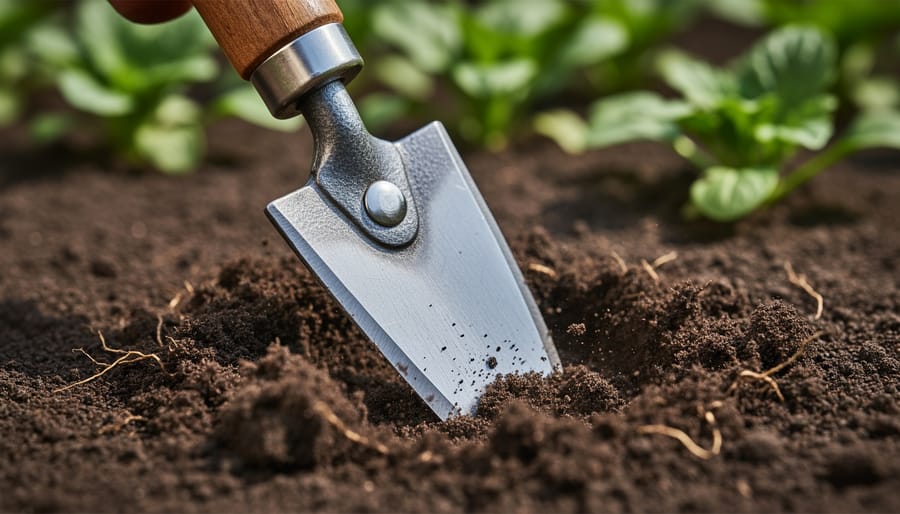
Types of Gardening Hoes Compared: Finding Your Perfect Match
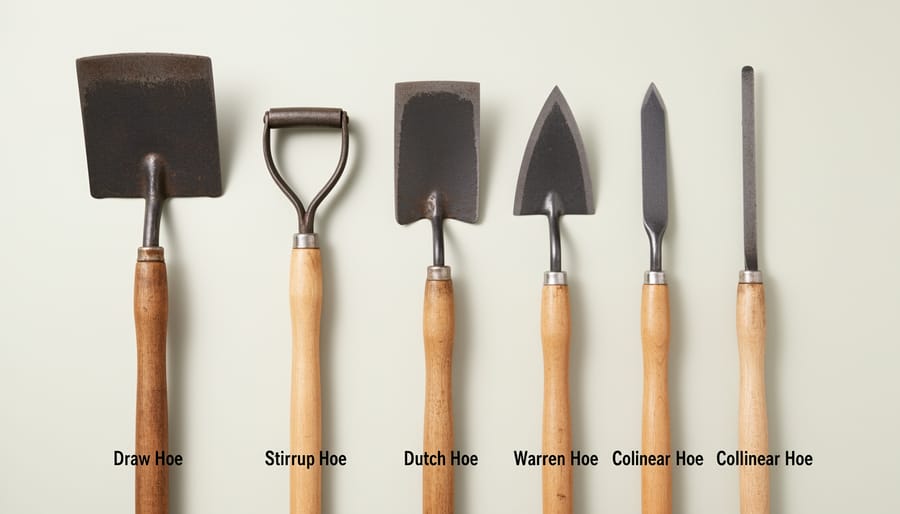
Not all hoes are created equal, and matching the tool to your task can be the difference between frustration and smooth, satisfying work in your garden. Here’s how the main hoe types stack up and which situations call for each one.
Traditional Garden Hoe: This classic workhorse features a flat, rectangular blade set at roughly a right angle to the handle. It excels at chopping weeds, breaking up compacted soil, and creating furrows for planting. The chopping motion works best in open spaces between rows or in established beds where you need to tackle larger weeds or turn soil quickly. If your plot is bigger than a few raised beds and you’re preparing ground for planting, a traditional hoe saves time and effort.
Triangle (Scuffle) Hoe: Also called a stirrup or loop hoe, this design uses a triangular or loop-shaped blade that you push and pull just below the soil surface, slicing weed roots without disturbing much earth. It’s gentler on your back since you’re not chopping down hard, and it’s brilliant for maintaining clean beds once your plants are established. The shallow cutting action makes it ideal for frequent, light weeding around delicate seedlings or in tightly spaced rows, perfect if you’re following a companion planting chart with mixed vegetables growing close together.
Hand Hoe: Think of this as the detail brush in your gardening toolkit. A hand hoe gives you precision for container gardens, raised beds, and anywhere you need to get between plants without damaging stems or roots. It’s light, portable, and essential if you garden in tight spaces or do a lot of kneeling work. Beginners often overlook hand hoes, assuming bigger is better, but they’re lifesavers for urban balconies and weeding around herbs.
Combination Tools: Hoe-cultivator and hoe-rake combos flip from one function to another, letting you weed on one side and rake or break up clumps on the other. These are practical for gardeners who want fewer tools to store and carry, especially in community plots where you might walk to your garden. The trade-off is that each side may not perform quite as well as a dedicated tool, but the versatility often wins out for most home gardeners.
| Hoe Type | Best Uses | Garden Size | Skill Level |
|---|---|---|---|
| Traditional Garden Hoe | Chopping weeds, breaking soil, creating furrows | Medium to large plots | All levels |
| Triangle/Scuffle Hoe | Light weeding, maintaining clean beds, working around seedlings | Any size, especially intensive plantings | Beginner-friendly |
| Hand Hoe | Containers, raised beds, precision work | Small spaces, urban gardens | All levels |
| Combination Tools | Versatile weeding, cultivating, raking | Any size, great for portability | All levels |
Your garden size and what you grow will guide your choice more than any other factor. A large vegetable patch benefits from both a traditional hoe for initial soil prep and a scuffle hoe for maintenance, while a balcony garden might only ever need a sturdy hand hoe. Many Canadian community gardeners start with a combination tool for its do-it-all nature, then add a specialized hoe once they discover which task they do most often.
Hoe and Cultivator Gardening Hand Tools

This heavy-duty stainless steel combination tool solves a problem many Canadian gardeners face: needing multiple tools for different tasks. The set pairs a traditional hoe blade with a three-pronged hand tiller, letting you switch from breaking up compacted soil to weeding between rows without heading back to the shed. That versatility makes it especially popular in community gardens, where shared tool sheds benefit from equipment that handles several jobs well.
The stainless steel construction holds up against Canadian weather extremes. Unlike carbon steel tools that rust when left damp, this hoe resists corrosion even after spring rain or morning dew. The blade stays sharp through rocky prairie soil and clay-heavy Ontario beds, while the tiller prongs dig into root systems without bending. One community gardener in Winnipeg told me she’s used hers for three seasons without any sign of rust or handle wobble, which matters when you’re maintaining both personal plots and communal spaces.
The 45-inch adjustable handle is where this tool really shines for group settings. Shorter gardeners can tighten it to around 40 inches to avoid shoulder strain, while taller folks extend it fully for comfortable reach. I’ve watched volunteer crews pass this tool between people of different heights during weekend work parties, each person adjusting it in seconds. That adaptability means fewer tools sitting unused because they don’t fit someone’s frame.
The hoe end works well for creating furrows when you front-yard veggies expand into new beds, while the cultivator attachment loosens soil before you choose garden pots for transplanting. It’s equally useful when you start herb gardening and need to prepare small beds or loosen mulch around established plants. With a 4.2 out of 5 rating from 183 customer reviews, gardeners consistently praise its durability and multi-function design. The tool stays in stock because it delivers on the promise of one reliable implement that handles varied garden work.
Hoe Garden Tool

This 45-inch dual-purpose tool puts both weeding and cultivating power in one package, making it a practical choice when you’re just starting out or trying to keep your tool shed from overflowing. The combination design means you can flip between breaking up compacted soil and slicing through weeds without switching tools mid-task, which saves time when you’re working through a Saturday morning garden session.
The 45-inch handle hits a comfortable length for most gardeners between 5’4″ and 6’2″, letting you work upright without the constant bending that leaves your lower back complaining by lunchtime. During longer weeding sessions around community garden plots, that extra reach makes a noticeable difference compared to shorter-handled alternatives. The handle itself offers enough grip for extended use, though heavier clay soils will still demand a firm hold and some muscle.
What makes this tool beginner-friendly is its straightforward functionality. New gardeners don’t need to master complex techniques or worry about specialized applications. The hoe side tackles row weeding and edging, while the cultivator prongs work surface soil around established plants and prepare seedbeds. It’s versatile enough to handle most common garden tasks without the learning curve that comes with more specialized designs.
Experienced gardeners appreciate having a reliable backup tool or a dedicated option for volunteers helping in shared spaces. With a 4.3 out of 5 rating from 691 customers, it delivers consistent performance rather than standout features. The steel construction holds up through Canadian freeze-thaw cycles when you store it properly, though you’ll want to wipe it down after use in wet conditions to prevent surface rust.
This hoe works best in small to medium gardens where you need flexibility more than specialized power. If your plot runs larger than 500 square feet or you face stubborn perennial weeds, you might eventually want something with more targeted cutting ability. But for general-purpose gardening where you’re maintaining beds, preparing soil, and keeping annual weeds in check, it covers the basics without breaking your budget or your back.
Garden Hoe Tool,Triangle Gardening Hoe with Sharp Blade for

The triangle-blade design sets this hoe apart for gardeners who need precision alongside power. That distinct pointed blade cuts into soil more aggressively than a traditional rectangular head, making it particularly effective for breaking up compacted earth around established plants or carving neat furrows for planting. The sharp edges tackle stubborn weeds with roots that spread laterally, slicing through them rather than merely scraping the surface.
With a 60-inch adjustable handle, this tool delivers exceptional reach without requiring you to bend or stoop, which matters enormously if you’re working multiple beds in a community garden or maintaining rows of vegetables. You can shorten the handle for close detail work or extend it fully when loosening soil along fence lines or in deep raised beds. That flexibility means you’re not locked into a single working height, and taller gardeners finally get a tool that doesn’t force them into an awkward crouch.
The triangular blade excels at tasks where you need to dig and weed simultaneously. Push it forward to loosen soil, pull it back to uproot weeds, or use the pointed tip to dig small planting holes without switching tools. One community gardener mentioned using hers to edge pathways between plots because the sharp point creates clean lines that rectangular hoes can’t match. It handles rocky Canadian soil well, though you’ll want to avoid prying against large stones to preserve the blade’s edge.
At 4.2 out of 5 from 98 customer ratings, gardeners appreciate the tool’s versatility and reach. The metal handle holds up through seasons of use, though the adjustable mechanism requires occasional tightening. If you’re managing larger garden spaces or struggle with back pain from traditional short-handled tools, this extended-reach triangle hoe addresses both concerns in one thoughtfully designed package.
WORKPRO Weed Puller Tool with Long Handle

The WORKPRO Weed Puller Tool tackles the dual challenge of precision weeding and surface cultivation with its 2-in-1 head design. One side features a traditional hoe blade for chopping through established weeds and breaking up compacted soil, while the flip side sports a rake configuration that pulls up shallow-rooted weeds and levels the surface after you’ve finished disturbing it. This combination eliminates the tool shuffle that slows down garden work, you’re not constantly setting down one implement to pick up another.
Community garden coordinators tell us this dual functionality makes a real difference during volunteer workdays. When multiple people share a limited tool inventory, having fewer specialized items means less waiting around and more hands actually working. A volunteer can hoe their section and rake it smooth without monopolizing two separate tools, which keeps the workflow moving and the atmosphere collaborative rather than frustrating.
Community gardens mean shared spaces with varying conditions, and this hoe-rake combo handles everything from clearing pathways to prepping new beds. Its durability matters when multiple people use it, and volunteers appreciate not needing three different tools for a Saturday morning work session.
The long handle extends your reach into deeper beds without forcing you to kneel or hunch repeatedly. During spring cleanup sessions, when you’re tackling rows of winter-hardened weeds, that extra leverage helps you work faster and finish with less lower-back fatigue. The tool’s straightforward metal construction holds up to the kind of use it sees in shared-garden settings, passed from person to person, occasionally dropped, stored outdoors under tarps rather than in climate-controlled sheds.
Current customers give it a 4.3 out of 5 rating based on 43 reviews, and it’s in stock for delivery across Canada. The dual-ended design means you’re essentially carrying two tools in the space of one, which matters when you’re hauling equipment from your car to a plot or storing gear in an apartment.
For gardeners who split their time between weeding runs and soil prep, this tool collapses two separate tasks into a single rhythm without switching implements.
Garden GURU Hand Hoe Tiller Cultivator Tool

The Garden GURU hand hoe proves that bigger isn’t always better when it comes to garden tools. This compact stainless steel implement fits comfortably in one hand and excels at jobs where a long-handled hoe would be clumsy or overpowered.
The stainless steel construction stands up to Canadian humidity, rain, and snow storage without developing rust spots that plague cheaper tools by mid-season. You can leave it on your potting bench or tuck it in a garden caddy without worrying about corrosion, which matters when you’re moving between tasks and don’t want to trek back to the shed between containers.
The ergonomic handle reduces hand fatigue during extended sessions of close-up work. If you’re weeding around the base plants in a perennial border transplanting seedlings, or working soil in raised beds, this tool lets you kneel or sit at ground level and work precisely without the awkward leverage of a long handle getting in your way.
Container gardeners find this hand hoe particularly useful for loosening compacted soil in pots and planters where a full-size hoe simply won’t fit. The compact head slips between plants in crowded window boxes and balcony containers, making it ideal for urban gardeners working in tight spaces.
With a 4.6 out of 5 rating from 106 customers, the tool has earned consistent praise for its build quality and versatility. Community gardeners who maintain multiple raised beds often carry this in their tool belt alongside hand pruners and a trowel, since it handles weeding, cultivating, and light soil prep without requiring a trip back to the tool rack.
Choose a hand hoe when you need control over power, when you’re working at ground level anyway, or when your garden consists mainly of containers and raised beds. The portability means you can garden anywhere without hauling full-size tools, and the rust resistance ensures it will serve you through many Canadian growing seasons.
Making the Right Choice: Our Recommendations for Different Gardeners
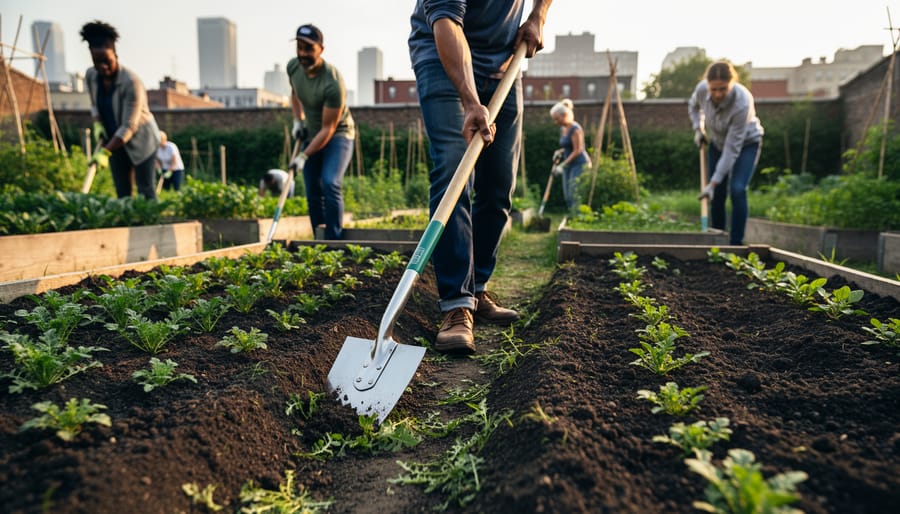
Choosing the right hoe isn’t about finding the “best” tool, it’s about matching the tool to your specific gardening situation and needs. After testing these options in community gardens and home plots across southern Ontario, here’s what we recommend for different types of gardeners.
For Beginners Starting Their First Garden
The Hoe Garden Tool with its 45-inch handle and 2-in-1 design offers the best starting point. It’s straightforward to use, handles both weeding and soil prep without overwhelming you with features, and the price won’t make you nervous about investing in a hobby you’re just exploring. One first-time gardener in our Hamilton community plot told us this tool gave her the confidence to tackle weeding without constantly second-guessing whether she was doing it right.
For Community Garden Volunteers
The WORKPRO Weed Puller Tool stands out here. Community gardens mean shared spaces with varying conditions, and this hoe-rake combo handles everything from clearing pathways to prepping new beds. Its durability matters when multiple people use it, and volunteers appreciate not needing three different tools for a Saturday morning work session.
Quick Recommendations by Situation
- Small urban spaces and container gardens: Garden GURU Hand Hoe, compact, precise, perfect for balconies and raised beds
- Larger plots over 500 square feet: Triangle Gardening Hoe with 60-inch handle, the extended reach saves your back during long weeding sessions
- Best all-around value: Hoe and Cultivator Gardening Hand Tools, the adjustable handle and three-fork tiller make it genuinely versatile
Sarah, who coordinates our Mississauga community garden, switched from a short-handled hoe to the adjustable Triangle model last spring. She said the difference was immediate, she could weed twice as long without her back protesting, which meant she actually finished preparing beds instead of giving up halfway through. Sometimes the right tool isn’t about fancy features; it’s about matching the handle length to your height and the blade style to your most frequent tasks.
Think about what you’ll do most often, how much space you’re working with, and whether you need one tool to do everything or can invest in specialized options as your garden grows.
Common Mistakes to Avoid When Buying a Gardening Hoe
Choosing your first gardening hoe can feel overwhelming, but knowing what to watch out for makes the decision much easier. Here are the most common missteps Canadian gardeners make, and how you can avoid them.
Choosing the Wrong Handle Length
Many new gardeners grab whatever hoe looks sturdy without considering their own height. A handle that’s too short forces you to hunch over, leading to back pain after just 20 minutes of weeding. Too long, and you’ll struggle with control and accuracy. Stand upright and imagine holding the hoe, the handle should let your hands rest comfortably without bending your back. Most adults do well with handles between 54 and 60 inches, but if you’re under 5’4″ or working in raised beds, a shorter 45-inch model might serve you better.
Ignoring Material Quality for Our Climate
That budget hoe with a painted carbon steel blade might look fine in the store, but one season of Canadian rain and freeze-thaw cycles will leave it rusty and pitted. Stainless steel costs more upfront, yet it’ll outlast cheaper alternatives by years. Remember, you’re not just buying a tool, you’re investing in something that needs to withstand spring mud, summer humidity, and fall dampness.
Buying Too Specialized Too Soon
Triangle hoes excel at precision work, and stirrup hoes are fantastic for specific weeding techniques, but they’re not where beginners should start. Your first hoe should handle multiple tasks, weeding, creating furrows, breaking up soil. Get comfortable with a versatile combination tool before adding specialized options to your collection.
Overlooking Ergonomics
A heavy hoe with a slippery handle will sit unused in your shed. Test the grip if you can, or look for cushioned, contoured handles that won’t blister your palms. Weight matters too, lighter doesn’t always mean better, but you should be able to comfortably lift and maneuver the tool for an hour without fatigue.
Your Questions About Gardening Hoes Answered
How do I maintain my hoe to keep it working well?
After each use, knock off soil clumps and wipe the blade with a dry cloth. Before storing, apply a light coat of vegetable oil or WD-40 to metal parts, and keep it in a dry spot, a simple routine that takes two minutes but adds years to your tool’s life.
What handle length is right for my height?
A good rule is that when you stand the hoe upright, the handle should reach somewhere between your shoulder and ear level. Shorter handles suit raised beds and containers, while longer ones (54 to 60 inches) work better for ground-level plots and help you avoid constant bending.
Can one hoe handle multiple gardening tasks?
Absolutely, combination tools like the 2-in-1 hoe-cultivators we reviewed let you weed, break up soil, and prep planting rows without switching tools. For most home gardeners, a versatile hoe beats owning three specialized ones you’ll rarely use.
How do I prevent rust in wet Canadian climates?
Stainless steel blades resist rust naturally, but any metal benefits from staying dry. After working in damp soil or rain, dry your hoe thoroughly and store it indoors or under cover, never lean it against an outdoor wall where morning dew settles.
When should I reach for a hand hoe instead of a long-handled one?
Hand hoes shine in tight spaces: container gardens, between closely planted vegetables, or along bed edges where you’re already kneeling. If you’re working a large open area or want to stay upright, the long handle saves your back every time.
Do I really need an adjustable handle?
If multiple people use the same tool, common in community gardens or households, adjustability means everyone gets a comfortable fit. Even solo gardeners appreciate switching to a shorter length for close work, then extending it for wide rows.
These questions come up constantly in our community garden workshops, especially from folks just getting started. The truth is, there’s no mystery to hoe maintenance or selection once you match the tool to your actual gardening habits. Pay attention to how your body feels after an hour of weeding, if your lower back aches, your handle’s probably too short. If the blade feels flimsy or bends when you hit compacted soil, you’ve skimped on quality.
Canadian gardeners deal with unique challenges, from spring mud that clings to everything to late-season rain that turns storage sheds into humidity traps. A hoe that works beautifully in Arizona might rust out in a single Vancouver winter if you don’t adapt your care routine. Keep it simple: clean, dry, protect. Your hoe will reward that small effort with seasons of reliable service, and you’ll spend more time enjoying your garden instead of shopping for replacement tools.
Choosing the right gardening hoe isn’t about finding the perfect tool that works for everyone. It’s about discovering what works best for your garden, your body, and the way you like to spend time with soil and plants. Whether you’re tending a few raised beds on your balcony or volunteering at a community plot, the hoe that feels right in your hands and matches your tasks will make every gardening session more enjoyable and productive.
The tools we choose matter beyond just getting the job done. A quality hoe that lasts for years means less waste and fewer trips to the store. When you invest in durable, well-made tools, you’re supporting sustainable gardening practices that align with caring for our Canadian landscapes. And when community gardeners share their favourite tools and techniques, everyone benefits from that collective knowledge.
We’d love to hear about your own experiences with gardening hoes and other tools. What has worked well in your garden? Have you discovered a tool that changed how you approach weeding or soil prep? Join the conversation with the Gardening Life community and share your insights. Your story might be exactly what another gardener needs to hear as they’re starting their own journey.
Here’s to many seasons of happy, productive gardening ahead. Pick up that hoe, head outside, and enjoy the work your hands will do.
This page includes affiliate links; purchases made through them may earn us a referral fee. As an Amazon Associate I earn from qualifying purchases.